Pages

Showing posts with label gravity. Show all posts

Tuesday, September 21, 2010

How To Possibly Detect Graviton Mass With Gravity Waves/Pulsars.

ResearchBlogging.orgGravitons are the particles that mediate the force of gravity in the analogous way that photons are responsible for the electro-magnetic field.  And like photons, gravitons are thought to be massless.  In fact, assuming general relativity is correct, the mass of the graviton has an upper bound of 7x10-32 eV which is really small. (See bold text at bottom.)  However, for alternative gravity theories this upper bound no longer holds.

Two neutron stars rotating rapidly around one ...                               Image via Wikipedia
Lee et al. have recently developed a new way to place a bound on the graviton mass that is general enough that it constrains this mass even in alternative theories to gravity.  This technique involves measuring correlations in the gravitational waves from the timing residuals of pulsars.

Just a reminder: fluctuations in the curvature of spacetime propagate as waves which are called gravity waves.  The top right picture shows the gravity waves given off by two neutron stars orbiting each other.  Pulsars, are "highly magnetized, rotating neutron stars" that emit a beam of light that can appear to flash the earth in very regular intervals like a lighthouse. See the lower right animation to see the "cycle of pulsed gamma rays from the Vela pulsar".

Back to the article.  Here is how the authors put it:
The pulsar timing array is a unique technique to detect nano-Hertz gravitational waves by timing millisecond pulsars, which are very stable celestial clocks. It turns out that a stochastic gravitational wave background leaves an angular dependent correlation in pulsar timing residuals for widely spaced pulsars (Hellings & Downs 1983; Lee et al. 2008). That is, the correlation C(θ) between timing residual of pulsar pairs is a function of angular separation θ between the pulsars. One can analyse the timing residual and test such a correlation between pulsar timing residuals to detect gravitational waves (Jenet et al. 2005). We find in this paper that if the graviton mass is not zero, the form of C(θ) is very different from that given by general relativity. Thus by measuring this graviton mass dependent correlation function, we can also detect the massive graviton.
So basically the correlation function between gravity waves and pulsar timing residuals puts a constraint on the graviton's mass.

Another aside: Thinking of the power spectrum of the CMB, and taking a minute to play this game may be helpful.  The power spectrum of the CMB is a correlation function of temperature fluctuations of the CMB. As that game shows, this correlation function changes significantly for changes in the amount of dark matter, dark energy, regular matter, etc...  Therefore, the shape of the power spectrum tells you a lot of physics.

Lee et al. are doing the same thing with correlation functions of gravity waves with pulsar timing residuals.  The shape of this power spectrum, which they denote as C(θ), changes significantly with graviton mass.  The plot above shows this change.  The plot on the left shows how C(θ) would look after 5 years of a bi-weekly observation and the plot on the right shows what C(θ) would look for a 10 year bi-weekly observation.

Using this technique and future gravity wave interferometers the authors claim that with 5 years of data they can place an upper bound on the graviton mass of 1x10-22 eV and after 10 years they can place an upper bound of 3x10-23 eV.

Now, even if the graviton does have mass, to put into preservative how light this particle must be if its mass is around these numbers, I will remind people that the mass of the electron is 510,998 eV! So a mass on the order of 10-23 eV is mind-blowingly tiny!

Kejia Lee, Fredrick A. Jenet, Richard H. Price, Norbert Wex, & Michael Kramer (2010). Detecting massive gravitons using pulsar timing arrays Accepted by ApJ arXiv: 1008.2561v2

Thursday, September 17, 2009

Just How Pretty/Ugly Is The Standard Model?

Sorry this post contains equations.  (I had treat myself and make such a post at some point.)

The standard model is the creative name physicists have given to the theory that successfully unites the three forces: electromagnetic, strong and weak forces with all of the known particles but fails to explain gravity.  Excluding gravity, the standard model seems to explain everything we know about the universe with a few modern exceptions such as dark energy and dark matter.

Now, how beautiful is this theory?  In modern physics, theories are derived from "actions".  (Later I will post on why this is.)  When you "extremize" an action, it gives you equations that tell you what exactly your theory is.

For example, here is the entire action for general relativity:

When you "extremize" this action you get everything we know about general relativity. (And hence gravity).  The Einstein equations from such this action become: (Details here.)


This may not be apparent, but all of general relativity follows from such elegant looking equations.  Ah, so beautiful.

Another example is the action that gives rise to Maxwell's Equations, and thus all of electricity and magnetism: (The integral of this quantity is the action)


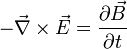
Here are the Maxwell Equations, derived from the above action, in all their symmetrical glory:


Now let's look at the Action for the standard model.  The action is the integral of this beast: (Click to See.)


Let's just say all of the equations that come from this is just too much.

There you go.  That image contains all the physics we know about the entire universe minus gravity. And now you all know how beautiful/ugly, the standard model is. :)

Thursday, August 20, 2009

Stars 101: The Fundamentals

Stars are perhaps the most fundamental building blocks of the universe. Without stars our universe would be a dark, cold (a few degrees above absolute zero) mixture of 72% hydrogen, 28% helium, and less than a tenth of a percent lithium. Period.
Stars are also where the four fundamental forces in the universe come together to fight for celestial supremacy. In one corner, coming in as the weakest force in nature - but the only one that can work on astronomical scales - is gravity which tries to crush the star down into a black hole. Gravity is responsible for bringing together clouds of gas and dust that collapse down to what are known as proto-stellar nebulae. Eventually as gravity compresses the cloud it will become hot and dense enough in the middle to bring the other major contender into the ring and a star will be born.

In the other corner, coming in as the unification of all of the other fundamental forces in nature, is the triple-threat of electromagnetism, the weak nuclear force, and the strong nuclear force. Despite being vastly more powerful than gravity, these three forces can only wield their full power at very small scales. They need environments where pressure and temperature become high enough to bring atoms close enough for these forces to work. The “Big Three” lead to nuclear fusion, which tries to blow the star apart and will eventually be the death of all stars. Let the battle begin.

So if stars are simply the result of the battle between gravity and the Big Three, what makes one star different from another? Every known celestial object is electrically neutral, so electromagnetism can’t produce differences between stars. The nuclear forces only care about the types of elements present (via the protons and neutrons in the nuclei) and since all stars are born form the Big Bang’s leftovers, they are all made of essentially the same two elements - hydrogen and helium - in the roughly the same proportions. That leaves gravity as the one thing that can be changed. The more massive a star is the stronger gravity pulls, resulting in higher pressures and temperatures in the core of the star, which increases the rate at which fusion occurs, bringing the forces back into balance and making the star burn hotter and brighter.

So in a rough sense, stars are who they are because of their mass and a balance between the most basic forces in nature.

Monday, November 12, 2007

Transgressing the Boundaries: Towards a Transformative Hermeneutics of Quantum Gravity

I started reading an article recently and I was very impressed with it. A link to it can be found here (pdf). It was written by Dr. Alan Sokal from New York University (Department of Physics). It is a little long (the actual article is 27 pages long (with notes), the rest is works cited), but if you have the time I would encourage you to read it and see what you think about the article. I would like to get your input on this.

Thursday, March 15, 2007

Jared @ CalTech.edu

Hello all,

So here I am in sunny California (though it wasn't sunny when I flew in this morning...)
The smog was pretty bad but the campus is beautiful from what little I have seen. I love that the buildings are old . Gorgeous architecture!I am not sure what to make of the school yet. The halls are empty since I guess this is exam week, though the future is not bright for these students:

All in all, I have made it out here pretty easily (despite the stint with the BYU travel office not letting me know that I had tickets until 5pm yesterday). I have even been able to find a place to stay (Yeah, for the 3 or so degrees separation theory for members of the Church)! I am way excited for the Pacific Coast Gravity meeting which will be held tomorrow and Saturday. Gary Horowitz is one of the session chairs and there will be a party at Kip Thorne's house friday night (for the conference program click on the title of this Post). Yeah for Physics!