I just get excited when great science can be not only useful and informative, but also beautiful, artistic and inspiring. Great work.
Showing posts with label pictures. Show all posts
Showing posts with label pictures. Show all posts
Tuesday, March 15, 2011
Beautiful Saturn Film
Continuing with the cool astronomical images, a number of people have put together this amazing film, which is a composite of images taken from the Cassini spacecraft. Cassini has been in orbit around Saturn since July of 2004.
(5.6k Saturn Cassini Photographic Animation from stephen v2 on Vimeo.)
I just get excited when great science can be not only useful and informative, but also beautiful, artistic and inspiring. Great work.
I just get excited when great science can be not only useful and informative, but also beautiful, artistic and inspiring. Great work.


Tuesday, March 8, 2011
Thursday, November 4, 2010
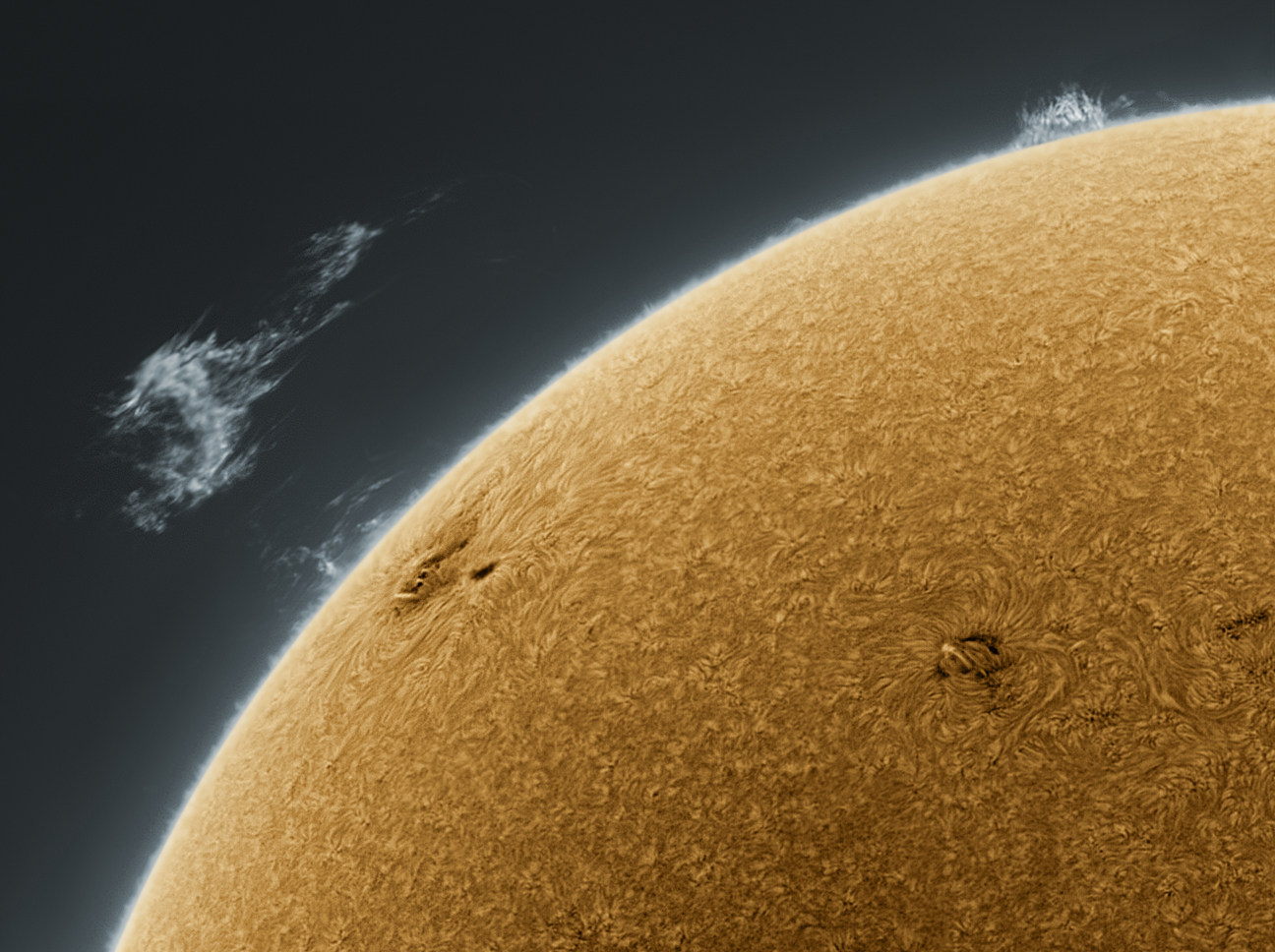
Our Beautiful Sun
Astronomy has its disadvantages but the beauty of its images sure isn't one of them.
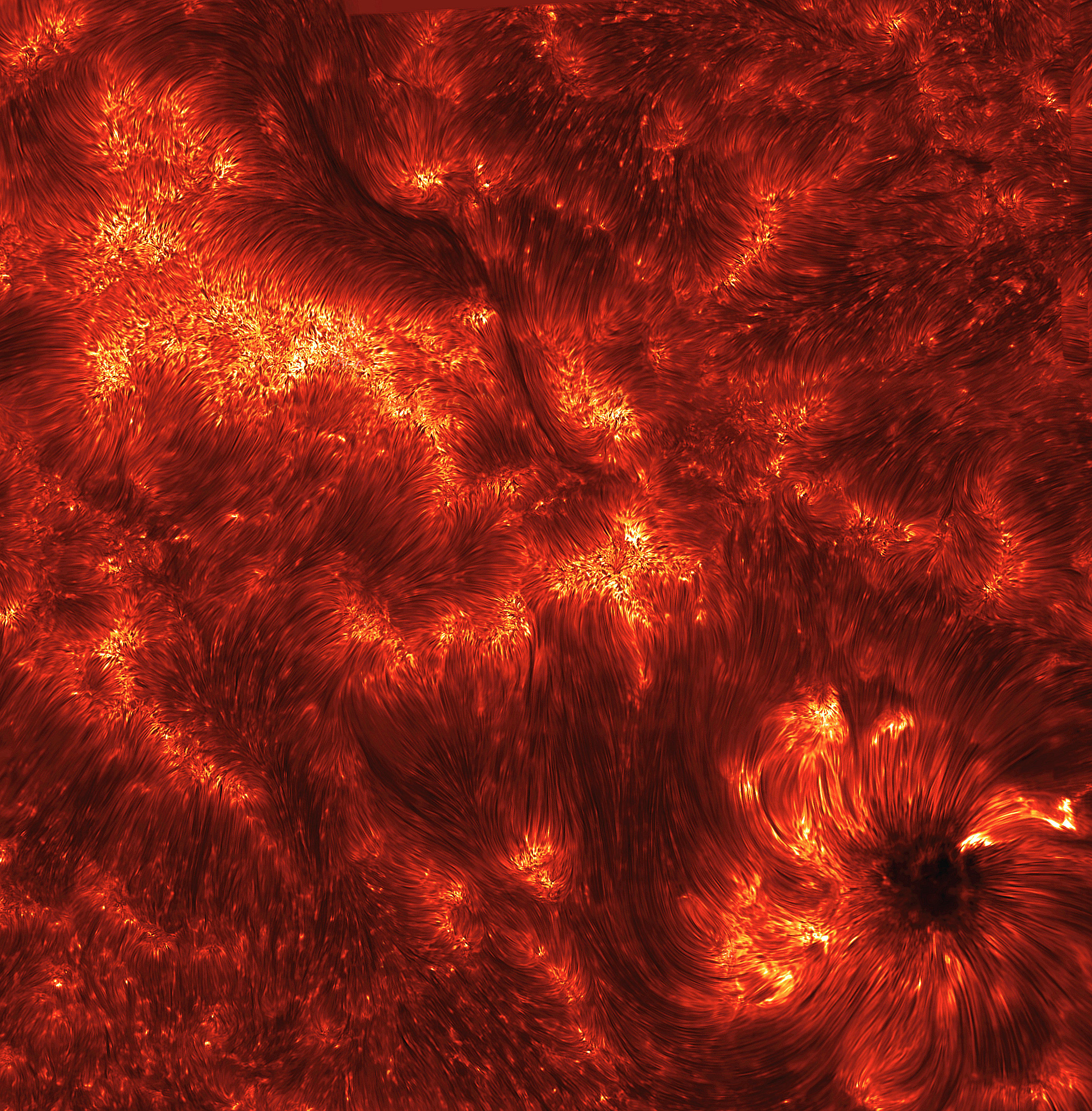 Click to embiggen.
Hat tip to APOD and Italy.
Hat tip to APOD and Italy.
Wednesday, February 17, 2010
Look How Beautiful Andromeda Is In Infrared!
I'm sure you all have heard questions like "Do I look better in black, blue, etc..." As Bad Astronomy points out, it turns out Andromeda looks pretty cool in infrared:

This pictures was taken by NASA’s Wide-field Infrared Survey Explorer (WISE). Compare this to how Andromeda looks in visible light:
 Pretty nice.
This pictures was taken by NASA’s Wide-field Infrared Survey Explorer (WISE). Compare this to how Andromeda looks in visible light:
Saturday, September 5, 2009
The Astronomy Picture Of The Day.
For those of you who don't know, you may be interested in checking out the Astronomy Picture Of The Day, run by NASA, from time to time.
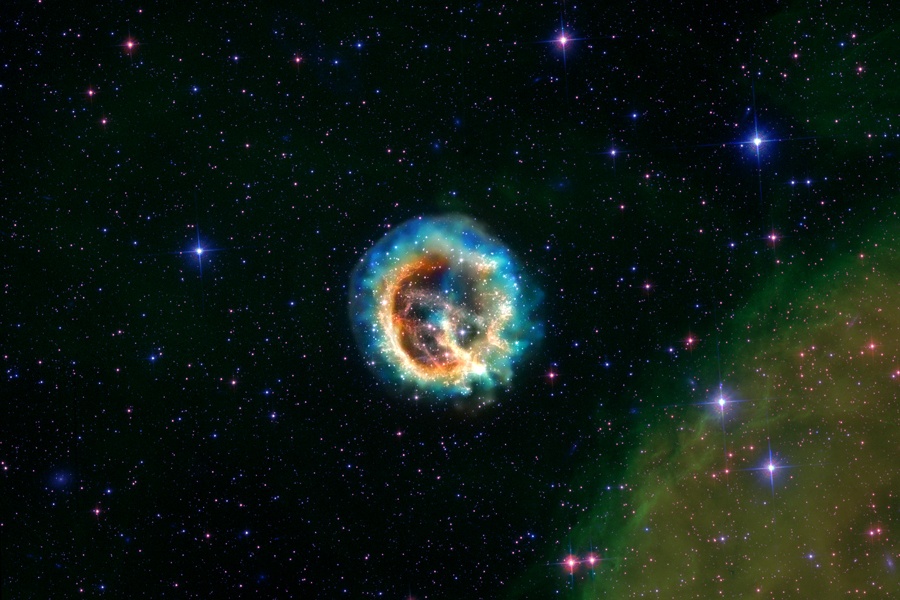
Every day this site posts a new picture, often very breathtaking, with a short description at the bottom of what you are seeing. The descriptions are always really good too. The picture above is today's picture which is of the debris left over after a star explodes. (Or supernova.)
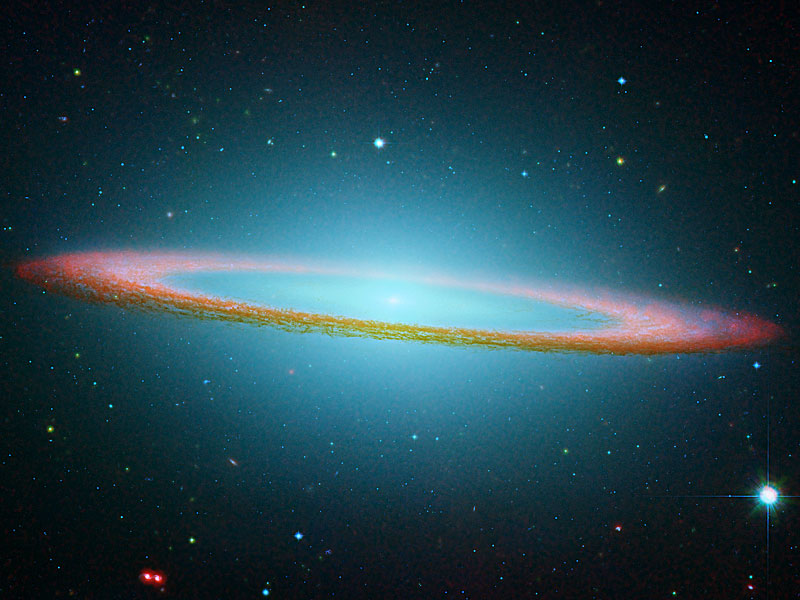
Another great thing I enjoy about the site it that is is searchable. Below are three examples I found searching. They are the Sombrero Galaxy, Cats Eye Nebula, and Hubble Ultra Deep Field respectively. I hope you enjoy this site, often referred to as APOD, as much as I have over the years.
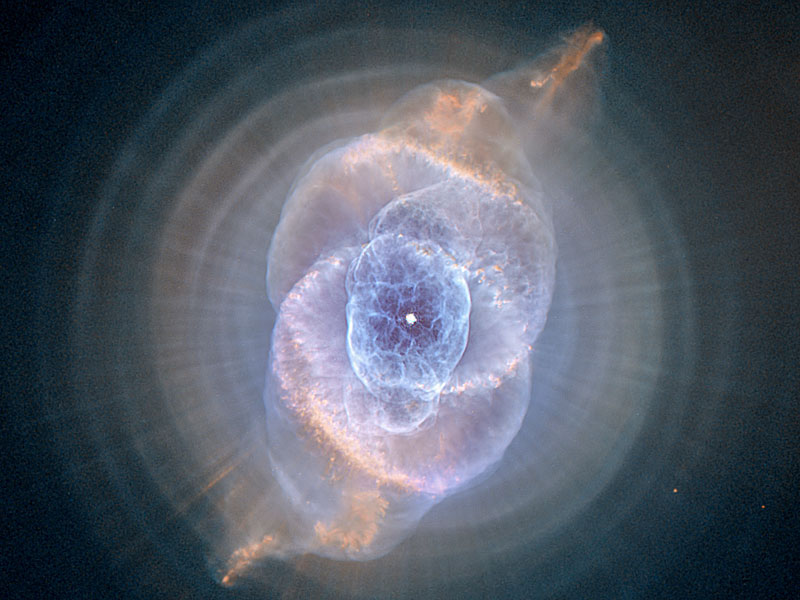
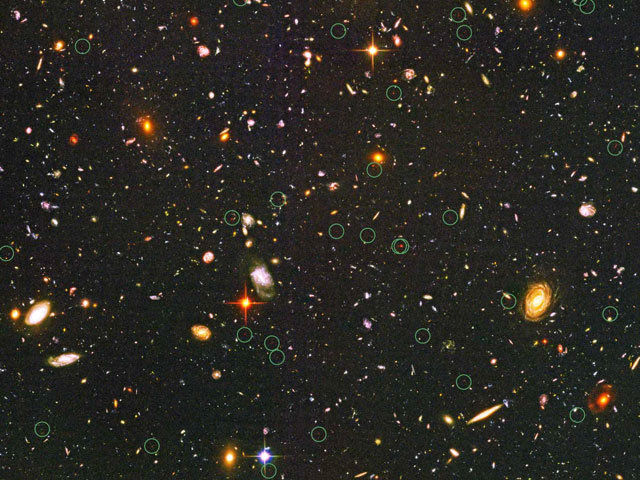
Every day this site posts a new picture, often very breathtaking, with a short description at the bottom of what you are seeing. The descriptions are always really good too. The picture above is today's picture which is of the debris left over after a star explodes. (Or supernova.)
Another great thing I enjoy about the site it that is is searchable. Below are three examples I found searching. They are the Sombrero Galaxy, Cats Eye Nebula, and Hubble Ultra Deep Field respectively. I hope you enjoy this site, often referred to as APOD, as much as I have over the years.
Wednesday, September 24, 2008
The Stuff of Textbooks
Occasionally someone somewhere takes a picture and it turns out to be famous. Usually these famous pictures end up in a textbook somewhere. Here is one picture that will probably end up in a textbook sometime soon because it is after all a very famous and important picture (the first of its kind):
Some of you (if not all) have seen this already. But if you have not then what's important about this picture is not the bright thing in the middle but the small dot at the top. You have probably guessed that thing in the middle is a star (very much like the sun) and the other dot (if it is confirmed) is a planet. So this is the first (optical range) picture of an extra-solar planet. The originating paper can be found here. The astronomy picture of the day here (with many other links). The team of astronomers used atmosphere correcting optics to compensate for the ground based telescopes to resolve the two bodies.
So this already turned up in the news (BBC) and will most likely make its way into the next edition of astronomy textbooks. Kudos to the guys that took that picture. Personally I think it would be cool to have a picture I took put into a textbook (that is other than one that I wrote myself).

Some of you (if not all) have seen this already. But if you have not then what's important about this picture is not the bright thing in the middle but the small dot at the top. You have probably guessed that thing in the middle is a star (very much like the sun) and the other dot (if it is confirmed) is a planet. So this is the first (optical range) picture of an extra-solar planet. The originating paper can be found here. The astronomy picture of the day here (with many other links). The team of astronomers used atmosphere correcting optics to compensate for the ground based telescopes to resolve the two bodies.
So this already turned up in the news (BBC) and will most likely make its way into the next edition of astronomy textbooks. Kudos to the guys that took that picture. Personally I think it would be cool to have a picture I took put into a textbook (that is other than one that I wrote myself).
Sunday, May 20, 2007
N216 pix
Hey fellow N216ers,
I just posted some pictures on my other blog.
I think that you'll enjoy them!
Jared
I just posted some pictures on my other blog.
I think that you'll enjoy them!
Jared
Subscribe to:
Posts (Atom)