I received an email from Google that said if there was no activity on this blog by the end of the year that we would lose it. And though it is true there hasn't been much activity in the last five years, I would still like this blog to be able to be a thing again one day.
So for that reason I am making this post to let Google know we are still alive while I contemplate how and in what way we might be able to resurrect this thing at some point in the future.
Sunday, December 31, 2017


Wednesday, April 24, 2013
Scientific Elitism
.jpg) |
| Darwin's 'bulldog', Thomas Huxley, was a chief proponent of Darwinistic ideas and tried to suppress the influence of creationism in academia. |
As a benefit of attending a largely Christian university trying to establish itself in the world of research academies, I have had the opportunity to take part in a Science and Religion seminar. It was a great review of some the topics and issues in the debate and it was held in such a way that no agendas were diguisingly (or blatantly) given as 'truth'. It was a great open forum (with some great lunches provided by the faculty dining center)!
A few times during this seminar the issue of elitism among the scientific communities was raised. This began in Europe shortly after Darwinian ideas started to take hold. Efforts by those in the X club and others so like-minded, wanted to maintain a hold on the academic community and weed out creationists and anti-evolutionaries. (note: here I use the term 'creationism' in the most general sense. It is the idea that the world/universe/whatever was created/guided/organized by some form of deity and is not strictly 'young earth' creationism.) In order to do so, they pushed the need for more advanced training to occur among 'professional' scientists in order to widen the gap between the two worlds. Obviously there are some good results of this movement: higher quality research being chief among them. There are some downsides too.
We have all been to conferences where 'that guy' gives the talk and has to battle his way through contentious comments or automatically dismissive audiences. You can feel bad for the guy even if his ideas are just plain crazy or they never have the benefit of taking an actual class in quantum theory. This form of elitism shows the human side of scientists and can also be seen in the difficulty in getting published by peer-review (especially if the editor/reviewers just don't like you or your research).
Last week, the BBC reported on the American Physical Society’s (APS) attempts to give a place for ‘crackpots’ to share their ideas. In so doing, they indirectly admit to elitism and that there may be merit to proposals made by some mathematically-untrained conference presenters.
The issue is that some who are considered crackpots just don’t have the language (i.e. mathematical background) to communicate their ideas effectively to the physics community. They cite an example of a Nobel in Chemistry being awarded to a man who, for years, was ridiculed. When he was finally able to share his ideas effectively, they were accepted and rewarded.
The solution is to give a special disguised conference session to those with ‘crazy’ ideas. Is it a “good” solution... I guess that we’ll have to wait to find out.
Here is a link to the article.
Monday, December 17, 2012
Misconceptions of Misconceptions of Physics
On YouTube there is a channel that I like to watch called MinutePhysics. Normally the short videos are pretty good and the channel creator does a good job at explaining some common (and some uncommon) physics in a short and intuitive way. So I was rather surprised when he posted a video about common misconceptions in physics that itself perpetuated common misconceptions in physics. Here's the video for you to watch so I can refer to it.
There are two things that are problematic in this video that I want to address. I will give a short explanation here and then a longer explanation further down.
1. Teaching Newtonian gravity is not lying.
The misconception that Newtonian gravity is fundamentally wrong, and therefore useless, is so prevalent among people that when mostly well informed individuals ask me about my research they are shocked to learn that I still use Newtonian gravity. They usually say something along the lines of, "I rememeber learning about Newton in high school/college, but you are probably way beyond that." They would be even more shocked to learn that most of the cutting edge research in physics uses Newtonian gravity and not relativity. It seems like every semester I have at least one or two students who express the idea that everything undergirding Newtonian gravity is wrong and that therefore all the collective wisdom, intuition, insight and knowledge of people who have used Newtonian gravity, or even Newtonian physics in general, is somehow invalid.
2. An equation and a calculator do not make reality.
Every semester I have to fight a major misconception with my students. I don't mean the pre-meds who take the introductory physics classes, or the "I don't know what I'm doing with my life students, but I have to take this class to get some sort of degree." students. I mean physics majors who are in their senior year and who have been through many physics classes already. I have to fight the misconception that just because the students have an equation and a calculator or computer that can calculate something to an arbitrary number of digits, that the result, to that precision, has meaning for the real world. This is a misconception that physicists of all stripes have to fight every day. And unfortunately this short video perpetuates this myth.
Let's take the sheep example. He gives an example of a sheep riding a train and says if you have a train going 2 mph and a sheep on the train is moving forward at 2 mph with respect to the train then,
But, according to him, if we want to be honest we have to use the special relativistic equation and see that the sheep is only moving 3.999999999999999964 mph. That is a difference of 0.000000000000000036 mph. The problem is, how did he measure that? No really! That is a perfectly valid question in physics, I am not just trying to ask a trite, funny question. If he claims that the sheep is actually moving 0.000000000000000036 mph slower than it should because of special relativistic effects then he will have to actually measure that. The problem is (as many, many, many, many of my professors over the years have pointed out), the sheep is made up of atoms. You can't calculate something, get a result and say, "This is how the world works." because you are ignoring the fact that everything is made up of real matter. You can't separate that fact or you will end up in trouble.
To give you an idea of why this is problematic let's take our result, the difference of 0.000000000000000036 mph, and see what this means. Suppose the sheep and the train move together for one hour, what would be the difference in how far they have moved based on this difference?
Now, as a physicist I am well aware of relativity, but this is an abuse of it. To say that Newton (and Galileo) were wrong because they didn't have access to a meter stick which measured femtometers, is itself wrong. To ignore real world considerations and then calling people who have to (and had to) deal with those real world considerations wrong is to ignore something fundamental about physics, and that is we live in a real, physical universe. And you can't ignore that fact. Even when teaching relativity.
[PS: If you want to see another example of abuse of equations, consider "Why Pigs Don't Diffract Through Doorways".]
There are two things that are problematic in this video that I want to address. I will give a short explanation here and then a longer explanation further down.
- Teaching Newtonian gravity is not lying. He is trying to make the point that light, even if it is massless, is still affected by gravity, which Newtonian gravity does not predict. True, but he makes his point by saying that teaching Newtonian gravity is lying to students. Newtonian gravity is still alive and well and is fundamental to of almost all undergraduate and even graduate (and post graduate) areas of study. The idea that teaching Newtonian gravity is wrong is a big misconception and this video simply perpetuates the misconception.
- Just because you have an equation that you can stick numbers into and a calculator to calculate it out to an arbitrary number of digits of precision does not mean that it has have physical meaning. I have to fight this misconception every semester with almost all of my students. It is harder to fight this misconception than it is to fight the "misconception" of a Galilean vs. Lorentz transformations.
1. Teaching Newtonian gravity is not lying.
The misconception that Newtonian gravity is fundamentally wrong, and therefore useless, is so prevalent among people that when mostly well informed individuals ask me about my research they are shocked to learn that I still use Newtonian gravity. They usually say something along the lines of, "I rememeber learning about Newton in high school/college, but you are probably way beyond that." They would be even more shocked to learn that most of the cutting edge research in physics uses Newtonian gravity and not relativity. It seems like every semester I have at least one or two students who express the idea that everything undergirding Newtonian gravity is wrong and that therefore all the collective wisdom, intuition, insight and knowledge of people who have used Newtonian gravity, or even Newtonian physics in general, is somehow invalid.
2. An equation and a calculator do not make reality.
Every semester I have to fight a major misconception with my students. I don't mean the pre-meds who take the introductory physics classes, or the "I don't know what I'm doing with my life students, but I have to take this class to get some sort of degree." students. I mean physics majors who are in their senior year and who have been through many physics classes already. I have to fight the misconception that just because the students have an equation and a calculator or computer that can calculate something to an arbitrary number of digits, that the result, to that precision, has meaning for the real world. This is a misconception that physicists of all stripes have to fight every day. And unfortunately this short video perpetuates this myth.
Let's take the sheep example. He gives an example of a sheep riding a train and says if you have a train going 2 mph and a sheep on the train is moving forward at 2 mph with respect to the train then,
2 mph + 2 mph = 4 mph
which he promptly declares to be false. He then proceeds to give a short explanation of how to add velocities in special relativity and produces the equation for adding velocities in special relativity (for those who want to know he is merely pointing out the difference between a Galilean vs. a Lorentz transformation. One assumes light has no speed limit and the other one does. But, by his definition what he presents is also false, since a Lorentz transformation is also incomplete, so he merely traded one misconception for another. Fail.).But, according to him, if we want to be honest we have to use the special relativistic equation and see that the sheep is only moving 3.999999999999999964 mph. That is a difference of 0.000000000000000036 mph. The problem is, how did he measure that? No really! That is a perfectly valid question in physics, I am not just trying to ask a trite, funny question. If he claims that the sheep is actually moving 0.000000000000000036 mph slower than it should because of special relativistic effects then he will have to actually measure that. The problem is (as many, many, many, many of my professors over the years have pointed out), the sheep is made up of atoms. You can't calculate something, get a result and say, "This is how the world works." because you are ignoring the fact that everything is made up of real matter. You can't separate that fact or you will end up in trouble.
To give you an idea of why this is problematic let's take our result, the difference of 0.000000000000000036 mph, and see what this means. Suppose the sheep and the train move together for one hour, what would be the difference in how far they have moved based on this difference?
0.000000000000000036 mph x .44704 (m/s)/mph = 1.61e-17 m/s
(that's meters per second instead of miles per hour)
1.61e-17 m/s * 3600 s = 5.8e-14 m
So if you let the sheep walk on the train and let the train go for one hour, then after one hour the difference that you would expect between using a relativistic vs. a non-relativistic calculation would be 5.8e-14 m or about 60 femtometers. To give you an idea of how small this is that is about 4 times larger then the nucleus of a uranium atom. Not 4 times larger than a Uranium atom, 4 time larger than the nucleus, which is very, very, very small. This distance is still about 3000 times smaller than the radius of an atom.
So is it wrong to use Galilean transformations and Newton's laws? No. If you can find me a wooden meter stick that has tic marks that go down into the femtometer range then you could say that Newton was wrong. But if you can't actually measure that accurately then it is wrong to say that the standard way we think about adding velocities is wrong. Just because someone came up with an equation and you can stick the numbers into a calculator and get a result does not mean that it has any real world interpretation.
Now, as a physicist I am well aware of relativity, but this is an abuse of it. To say that Newton (and Galileo) were wrong because they didn't have access to a meter stick which measured femtometers, is itself wrong. To ignore real world considerations and then calling people who have to (and had to) deal with those real world considerations wrong is to ignore something fundamental about physics, and that is we live in a real, physical universe. And you can't ignore that fact. Even when teaching relativity.
[PS: If you want to see another example of abuse of equations, consider "Why Pigs Don't Diffract Through Doorways".]
Sunday, September 9, 2012
PhD Comics and UCI on Extra Dimensions
PhD comics say down with UC Irvine professors Daniel Whiteson and Jonathan Feng to talk about extra dimensions and their potential effect on gravity.
Tuesday, September 4, 2012
Penrose On Whether A Platonic Objectivity Can Exist Independent of Human Minds.

I have been rereading certain sections of The Road To Reality by the famous mathematical physicist Roger Penrose as he touches on many things near and dear to my heart. One of these things is whether there is a real existence of objective truth independent of human minds. Penrose seems to argue such objective frameworks probably do exist and uses math as an example. He also admits by analogous reasoning one may argue an objective morality or aesthetics beyond the minds of men may also exist but in this book he is only concerned with the math. Now to quote Penrose:
Platonic existence, as I see it, refers to the existence of an objective external standard that is not dependent upon our individual opinions nor upon our particular culture. Such 'existence' could also refer to things other than mathematics, such as to morality or aesthetics, but I am here concerned just with mathematical objectivity, which seems to be a much clearer issue...
Plato himself would have insisted that there are two other fundamental absolute ideals, namely that of the Beautiful and that of the Good. I am not at all adverse to admitting the existence of such ideals, and to allowing the Platonic world to be extended so as to contain absolutes of this nature.
And now for his reasoning about math. Though he can't prove it, he seems to believe that belief in a real objective mathematics independent of man is necessary in order to trust it and make progress. And because the robustness of math transcends the notorious untrustworthiness of human minds, it seems to have a reality that goes beyond it's creation coming from the minds of men:
Yet, there is something important to be gained in regarding mathematical structures as having a reality of their own. For our individual minds are notoriously imprecise, unreliable, and inconsistent in their judgements. The precision, reliability, and consistency that are required by our scientific theories demand something beyond any one of our individual (untrustworthy) minds. In mathematics, we find a far greater robustness than can be located in any particular mind. Does this not point to something outside ourselves, with a reality that lies beyond what each individual can achieve?...
He then says a typical critique is that math is just a product of human minds but has these amazing properties because it has been distilled down over years to those human ideas that can consistently be shown to be true by all. He then says this line of reasoning is circular because for everyone to agree that something is right requires an external standard. (Leading us back to an external objective existence.) He then says:
Mathematics itself indeed seems to have a robustness that goes far beyond what any individual mathematician is capable of perceiving. Those who work in this subject, whether they are actively engaged in mathematical research or just using results that have been obtained by others, usually feel that they are merely explorers in a world that lies far beyond themselves--a world which possesses an objectivity that transcends mere opinion, be that opinion their own or the surmise of others, no matter how expert those others might be.
He then decides to illustrate how we might expect history to be different if math was subjective. Fermat's last theorem was proposed as being true 350 years before it was proven. If the theorem was subjective and culturally relativistic, then over 350 years with so many cultures contemplating the idea, surely a counterexample may have been constructed. Back to Penrose:
Let me illustrate this issue by considering one famous example of a mathematical truth, and relate it to the question of 'objectivity'. In 1637, Pierre de Fermat made his famous assertion now known as 'Fermat's Last Theorem.'... Fermat's mathematical assertion remained unconfirmed for over 350 years, despite concerted efforts by numerous outstanding mathematicians. A proof was finally published in 1995...
Now, do we take the view that Fermat's assertion was always true, long before Fermat actually made it, or is its validity a purely cultural matter, dependent upon whatever might be the subjective standards of the community of human mathematicians? Let us try to suppose that the validity of the Fermat assertion is in fact a subjective matter. Then it would not be an absurdity for some other mathematician X to have come up with an actual and specific counter-example to the Fermat assertion, so long as X had done this before the date of 1995...
I think that virtually all mathematicians, irrespective of their professed attitudes to 'Platonism', would regard such possibilities as patently absurd.
In conclusion: Just because humans discovered something, like math, doesn't mean they invented its objective reality. Belief in such an objective existence independent of the minds of men leads one to be able to "feel that they are merely explorers in a world that lies far beyond themselves--a world which possesses an objectivity that transcends mere opinion." A world, as Penrose describes later, that seems to transcend time and this mortal sphere as it seems to be vastly larger then what is needed to describe this physical world and in fact would be largely unknown if we tried to limit math to that which does seem applicable to this mortal sphere. And as Penrose alludes to in the first quote, if the existence of an objective mathematics beyond the minds of men actually exists, what what other such objective frameworks my exist in reality? I will let the readers decide for themselves but the possibility of exploring such timeless and objective "worlds that [lie] beyond ourselves" to me is fascinating.
Monday, August 6, 2012
"Dare Mighty Things"
Far better it is to dare mighty things, to win glorious triumphs even though checkered by failure, than to rank with those poor spirits who neither enjoy nor suffer much because they live in the gray twilight that knows neither victory nor defeat. -- Teddy RooseveltLast night after a journey of several hundred million miles a small hunk of metal successfully touched down rather softly on the surface of Mars. 150 million miles away (and 14 minutes later) a large group of people started jumping up and down. This is the spirit of human exploration and a desire to dare mighty things.
The scientists at the JPL and NASA may just be smiling for days if not weeks.
 |
| A happy John Grunsfeld speaking with reporters after the landing. |
Thursday, July 19, 2012
PhD Jobs Update: Post-Docs Fill The Void
The fine folks at the AIP's Statistical Research Center have the latest employment numbers for physics PhD's a year after graduation. First the good news: unemployment is still amazingly low. Only 2% of physics PhD's were unemployed a year after graduation compared to about 9% for the general population in the US over the same time period and over 10% for those ages 25-35. The bottom line is that physics PhD's continue to be extremely employable. Isn't it nice to feel wanted?
Now for the bad news: between 2008 and 2010 the fraction of new PhD's taking potentially permanent positions fell by about 8%. The deficit was made up largely by increases in the availability of post-docs, at least partially due to the stimulus package passed in 2009.
 So while there are still plenty of jobs, more and more of those jobs are temporary positions designed to funnel people into faculty jobs that have been extremely scarce.
Hopefully, the potentially-permanent jobs will return as the economy improves. Of course that is assuming government deadlock, the national debt, global warming, European fiscal crises, or attacks by Godzilla don't derail our tepid recovery. While physics PhD's aren't immune to the world's economic woes, it does appear that we're faring better than most.
Now for the bad news: between 2008 and 2010 the fraction of new PhD's taking potentially permanent positions fell by about 8%. The deficit was made up largely by increases in the availability of post-docs, at least partially due to the stimulus package passed in 2009.

Hopefully, the potentially-permanent jobs will return as the economy improves. Of course that is assuming government deadlock, the national debt, global warming, European fiscal crises, or attacks by Godzilla don't derail our tepid recovery. While physics PhD's aren't immune to the world's economic woes, it does appear that we're faring better than most.
Wednesday, July 18, 2012
Learning Python
Lately for a few different reasons I have been working on learning python. A few years ago I spent some time going over the basics and wrote a few scripts but I never spent much time with it. This time around I have spent more time with it, especially learning the ins and out of Tkinter, which is the standard GUI library for python. First I wanted to give my general impression of python.
To give an analogy I will compare different programming languages to different types of people. Programming in C is like dealing with a very intelligent, but casual, math professor who is in every way a normal person except that he constantly keeps having you solve some of the weirdest and most esoteric problems anyone can find, and you can't help but wonder how this applies to the real world. Programming in C++ is the same way except the math professor is the chair of the department, and he wrote the book. Of course this means that FORTRAN is that elderly professor in the department that has been teaching since before the current set of associate professors were born.
Programming in Matlab is like having a very intelligent roommate that can fix just about any electronic device, except he can't cook pasta without ruining it. In other words, he is great at his one thing, beyond that, go and find someone else.
Programming in python is like dealing with a Chinese online gamer with ADD.
I think that Chinese is an apt way of describing python. Just as with Chinese where there are thousands of "basic" characters in the language that can be modified and combined in unique ways to give new or additional meanings to the language. In python it is not uncommon to come across a statement like this: "With this function there are 140 different modes that can be used." (I actually read that in some online documentation.)
Just as with Chinese, in python there are thousands of "basic" commands, or even just hundreds of "standard" libraries, and all of these can be combined and/or modified by many different modes and functions that can produce very unique results. There are so many different options that I would estimate that it would take about a year to become proficient in the "basics" of python. The reason why I said that python is like a Chinese gamer with ADD is because even though the documentation for python is very extensive, it always seems incomplete. While learning python I have come across a number of online databases that seem very promising at first, but ultimately end with something like "To be updated later!" (Contrast that with the API for C++ in Windows which has every single option and command documented three times across three different sites in excruciating detail, and those are just the sites maintained by Microsoft. Granted that C++ has been around longer and the Windows API is used more, but still...) If I don't run into the "to be updated later" problem then it is almost always, "There are 140 different modes for this function, and we will talk about the 7 most common ones, and don't even think about learning about the other 133 other potentially useful modes for this function, of which you will most likely really want to use 10 or 12 of them, but we won't talk about all the useful stuff here because nothing can ever be complete in any documentation for python. MWAHAHAHAHAHA!!!"
So if python is like Chinese, then C is like learning English. There are at most 100 useful characters in the English language, but from all those simple characters we can build the full range of literary thought. It just takes more characters to build an equivalent thought. For example, I wrote a simple GUI in C++ that even unfinished was several thousand lines long, spread over 5 different files. I wrote the equivalent GUI in python and it took 100 lines and one file. Even though my python script was shorter and more visually pleasing, programming in C++ felt like I was creating something epic, personal and with infinite variety. Programming in python felt like dealing with an annoying Chinese gamer who couldn't hold a coherent conversation.
In the future I definitely plan on using python for somethings, because despite the ADD aspect, it is very useful. It is good at doing in simple front end stuff that people have to deal with frequently, but don't need to get into the blood and guts of it. For everything else I prefer C or C++, and Matlab for all my data processing. I intend to use python to quickly and seamlessly integrate many different C programs and associated output, but not for any other high end stuff that requires real programming. Using python for anything else would drive me nuts.
Python does have a slightly different flow to it than most other programming languages, and it takes some getting used to, but once the quirks are learned it gets better.
To give an analogy I will compare different programming languages to different types of people. Programming in C is like dealing with a very intelligent, but casual, math professor who is in every way a normal person except that he constantly keeps having you solve some of the weirdest and most esoteric problems anyone can find, and you can't help but wonder how this applies to the real world. Programming in C++ is the same way except the math professor is the chair of the department, and he wrote the book. Of course this means that FORTRAN is that elderly professor in the department that has been teaching since before the current set of associate professors were born.
Programming in Matlab is like having a very intelligent roommate that can fix just about any electronic device, except he can't cook pasta without ruining it. In other words, he is great at his one thing, beyond that, go and find someone else.
Programming in python is like dealing with a Chinese online gamer with ADD.
I think that Chinese is an apt way of describing python. Just as with Chinese where there are thousands of "basic" characters in the language that can be modified and combined in unique ways to give new or additional meanings to the language. In python it is not uncommon to come across a statement like this: "With this function there are 140 different modes that can be used." (I actually read that in some online documentation.)
Just as with Chinese, in python there are thousands of "basic" commands, or even just hundreds of "standard" libraries, and all of these can be combined and/or modified by many different modes and functions that can produce very unique results. There are so many different options that I would estimate that it would take about a year to become proficient in the "basics" of python. The reason why I said that python is like a Chinese gamer with ADD is because even though the documentation for python is very extensive, it always seems incomplete. While learning python I have come across a number of online databases that seem very promising at first, but ultimately end with something like "To be updated later!" (Contrast that with the API for C++ in Windows which has every single option and command documented three times across three different sites in excruciating detail, and those are just the sites maintained by Microsoft. Granted that C++ has been around longer and the Windows API is used more, but still...) If I don't run into the "to be updated later" problem then it is almost always, "There are 140 different modes for this function, and we will talk about the 7 most common ones, and don't even think about learning about the other 133 other potentially useful modes for this function, of which you will most likely really want to use 10 or 12 of them, but we won't talk about all the useful stuff here because nothing can ever be complete in any documentation for python. MWAHAHAHAHAHA!!!"
So if python is like Chinese, then C is like learning English. There are at most 100 useful characters in the English language, but from all those simple characters we can build the full range of literary thought. It just takes more characters to build an equivalent thought. For example, I wrote a simple GUI in C++ that even unfinished was several thousand lines long, spread over 5 different files. I wrote the equivalent GUI in python and it took 100 lines and one file. Even though my python script was shorter and more visually pleasing, programming in C++ felt like I was creating something epic, personal and with infinite variety. Programming in python felt like dealing with an annoying Chinese gamer who couldn't hold a coherent conversation.
In the future I definitely plan on using python for somethings, because despite the ADD aspect, it is very useful. It is good at doing in simple front end stuff that people have to deal with frequently, but don't need to get into the blood and guts of it. For everything else I prefer C or C++, and Matlab for all my data processing. I intend to use python to quickly and seamlessly integrate many different C programs and associated output, but not for any other high end stuff that requires real programming. Using python for anything else would drive me nuts.
Python does have a slightly different flow to it than most other programming languages, and it takes some getting used to, but once the quirks are learned it gets better.
Friday, July 6, 2012
A Particle "Consistent with" the Higgs


This week, the CERN collaboration announced the detection of a new particle consistent with the long-sought Higgs boson. Both the ATLAS and CMS detectors detected a signal at between 125 and 126 GeV at 5 sigma. The people in charge are naturally cautious. More data is necessary to positively identify the particle, but this time, it certainly looks like the real thing!
Congratulations Particle Physicists!
Thursday, June 28, 2012
Exploring Mars with Engineering
Back in 2004, NASA's favorite new toys were the twin Mars rovers, Spirit and Opportunity. They were small little "little-engines-that-could" running around Mars and while the science was pretty good, the P.R. was phenomenal. In the wake of that success, NASA decided that they needed to build another Mars rover. Instead of small and cute, this one, it was decided, would be the bigger, badder rover. Initially named the "Mars Science Laboratory", it was going to be roughly the size of an SUV and carry a wide variety of scientific instruments including almost a dozen cameras, four spectrometers, and the equivalent of a well-equipped weather station. MSL, which has been re-branded as the Curiosity Rover, was the subject of some controversy in it's design phase due to it's large budget of $2.5 billion, it's 30% cost overrun (which by NASA standards isn't all that bad), and it's method of decent.
Previous NASA missions had either used a rocket to get all the way to the ground or used a combination of parachutes and huge air-bags to simply bounce to a stop on the Martian surface. This will be the first time a sky-crane has been used and frankly it's got a lot of people feeling very nervous.
Often we physicist make fun of the engineers in the world. If this works I promise to never again mock an engineer... at least for a week.
Previous NASA missions had either used a rocket to get all the way to the ground or used a combination of parachutes and huge air-bags to simply bounce to a stop on the Martian surface. This will be the first time a sky-crane has been used and frankly it's got a lot of people feeling very nervous.
Often we physicist make fun of the engineers in the world. If this works I promise to never again mock an engineer... at least for a week.
Tuesday, June 26, 2012
The Physics of Slinkies
If you ever want to really boggle someone's mind with an extremely simply object, I suggest a slinky.
Tuesday, June 5, 2012
Transit of Venus Today -- Watch it Live!
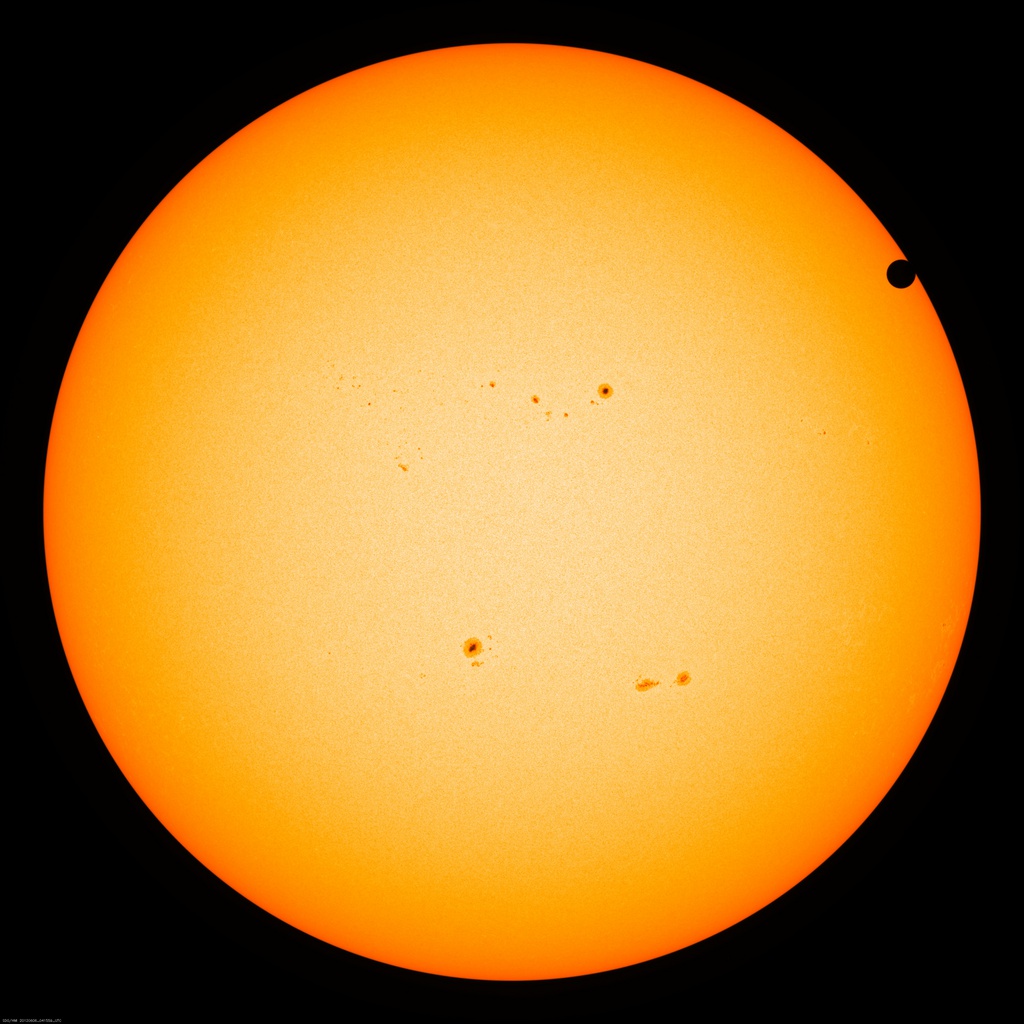
For those who have any interest in astronomy or who regularly check out the Astronomy Picture of the Day, this will be very old news, but for everyone else, I wanted to get the word out that today is the last time this century that the planet Venus will pass in front of the Sun. What is special about this, you might ask? Well, this type of transit is one of the rarest astronomical events that we can predict. Pairs of transits occur separated by a period of eight years, but these pairs are separated by over a century. You may remember the last transit of Venus which occurred in 2004. But if you miss today's, you will have to wait until 2117 to see it again.
Historically, the transit of Venus is also important, because it provided one of the first somewhat accurate determinations of the Astronomical Unit (the distance between the Earth and the Sun). Many distances in astronomy can be determined by the parallax from the Earth's motion around the Sun. The distance to an object can be determined by the change in viewing angle to that object by simple geometry. However, as a result, these distances were always in terms of the change in position of the Earth, which comes from the Astronomical Unit. Also, Kepler's third law allowed scientists to determine the distances from the other planets to the Sun, but again, this was in terms of the Astronomical Unit. However, until the 17th century, no one had a good idea of how big the Astronomical Unit was. In 1639, Jeremiah Horrocks made observations of the transit of Venus which allowed him to not only estimate the size of Venus, but also to make the most accurate (until that point) estimation of the distance from the Earth to the Sun (the Astronomical Unit). (FYI, The history involved in determining the size of the AU is actually very interesting and a lot more involved than what I've given here.)
Even for those who do not have a crazy historical bent, the transit of Venus is just plain cool! (You can think of it as an extremely small annular eclipse of the Sun.) The above image is downloaded from NASA's Solar Dynamics Observatory and will update automatically through the day. For those in the United States, the transit will be visible about sunset. For visibility times and transit paths in other parts of the world, check out NASA's websites on the Transit of Veus. If you try to view the transit first-hand, make sure you remember proper solar viewing safety. Happy Viewing!
Sunday, May 20, 2012
Metaphysics Explained, for the people who read the first word of the title and thought, "I'm not into astrology and witchcraft or Eastern Religions and all that junk."
[Author's note: This post is about the philosophical concept of metaphysics. If you want to learn about the more common usage of the word, try looking it up using Google. This started out as a comment to a previous post but I decided that a full post should be used to explain this concept before I finish my comment.]
Metaphysics is perhaps one of the most misunderstood and misused ideas in our modern world (especially when it gets applied to religion and then it becomes a misunderstanding squared, a L^2 error if you will). So here is a brief run down of metaphysics (this is important because meta-_____ and metaphysics keep popping up in places where you least expect it, even if it is not mentioned by name).
The word metaphysics originally came from the Greek μετά (meta) and φυσικά (physics) (literally "after" or "beyond" physics). The term came about because Aristotle wrote several books and one of them was named Physics and another one was named First Philosophy. Several years later when Aristotle's standard works were compiled into a single collection, the main editor of the collection just happened to stick the book First Philosophy after the book Physics, much in the same way the book Zephaniah follows the book Habakkuk in the Bible (i.e. there may have been a reason that made sense to person who stuck it there, but in the end it's just the way the cookie crumbled). After a while the book First Philosophy was referred to by Greek speaking scholars as being meta-physics, meaning, "That book after the book on physics" (or to put it in Greek: "τὰ μετὰ τὰ φυσικά").
When Latin speaking scholars heard about this they misinterpreted the nickname for the book to hold some special insight and meaning for what the book contained and thus the name meta-physics (again, literally "after" or "beyond" physics) was used by Latin (non-Greek) speaking scholars to signify anything that went beyond the normal study of physics, or anything that looked into why physics was the way it was (eventually it got associated with a lot of spirituality, occult and Eastern Religion stuff, which is why modern metaphysicists will never admit that that is what they do. They will always insist that they do something respectable called "theoretical physics" and not that dirty pseudo-mumbo-jumbo, but that is a different story).
So, now that the history lesson is out of the way, the term "metaphysics" does have a precise technical meaning that has nothing to do with the original meaning. So now me may ask how do philosophers use the term metaphysics today, and what does it mean to be "meta"? To explain this I will use a simple analogy. Think of a house. Think of all the stuff inside. The sofa, the TV, the beds, the chairs, the tables, the fridge (complete with moldy and rotting left-overs that you haven't eaten yet...yeah, you should probably throw those out. I'll wait.). In this imaginary house, all the things you interact with is analogous to physics (and all its related fields of chemistry, biology, geology, astronomy etc.). The things you bump up against on a daily basis are the things that make life possible and determine things like weather, baseball games, carney rides, postage stamps and glow worms.
But in our imaginary house you find that you can't put stuff wherever you want. You have to deal with things like walls, electrical outlets, light fixtures, water lines and door frames. It doesn't matter if you really, really, really, really want to put your washing machine in the middle of your living room. You can't. There's no water hook-up and no power outlet. So you find that in some cases your physics is constrained by something else. Something that you don't (and can't) interact with on a daily basis. The frame of the house, with all of the electrical wiring and pipes, is the thing that determines the physics of your daily life. The part of the house that you do not always see, but determines whether or not you can buy that 2000" TV, is the metaphysics.
So metaphysics is the thing that fundamentally determines everything else about reality (and in a very colloquial sense, to "go meta" or to "be meta" means to go to the next level of what determines our reality). For modern physicists who hear the word "metaphysics" and think of people rubbing holy oils all over their bodies and chanting strange chants while connecting to the spirals of the universe through the crystals, it may come as a shock that theoretical physicists are nothing more than metaphysicists with a degree in math. In the philosophical sense theoretical physics, including quantum mechanics, general relativity, string theory, cosmology and everything in between is just the modern version of Aristotle's metaphysics. They are trying to get to and understand the fundamental structure of reality and find out what determines everything else. And that is precisely what metaphysics is.
Returning to my house analogy, if you read through it and start thinking, "What about the stuff that makes up the framework? The wood and metal and other things determine the framework of the house just like the framework determines the house." Well, as Dr. Chris Foster would say, "Congratulations you just made a meta-analogy! I'm about to go meta on your meta! You meta?" So if you get that, then you get the concept of metaphysics.
Metaphysics is perhaps one of the most misunderstood and misused ideas in our modern world (especially when it gets applied to religion and then it becomes a misunderstanding squared, a L^2 error if you will). So here is a brief run down of metaphysics (this is important because meta-_____ and metaphysics keep popping up in places where you least expect it, even if it is not mentioned by name).
The word metaphysics originally came from the Greek μετά (meta) and φυσικά (physics) (literally "after" or "beyond" physics). The term came about because Aristotle wrote several books and one of them was named Physics and another one was named First Philosophy. Several years later when Aristotle's standard works were compiled into a single collection, the main editor of the collection just happened to stick the book First Philosophy after the book Physics, much in the same way the book Zephaniah follows the book Habakkuk in the Bible (i.e. there may have been a reason that made sense to person who stuck it there, but in the end it's just the way the cookie crumbled). After a while the book First Philosophy was referred to by Greek speaking scholars as being meta-physics, meaning, "That book after the book on physics" (or to put it in Greek: "τὰ μετὰ τὰ φυσικά").
When Latin speaking scholars heard about this they misinterpreted the nickname for the book to hold some special insight and meaning for what the book contained and thus the name meta-physics (again, literally "after" or "beyond" physics) was used by Latin (non-Greek) speaking scholars to signify anything that went beyond the normal study of physics, or anything that looked into why physics was the way it was (eventually it got associated with a lot of spirituality, occult and Eastern Religion stuff, which is why modern metaphysicists will never admit that that is what they do. They will always insist that they do something respectable called "theoretical physics" and not that dirty pseudo-mumbo-jumbo, but that is a different story).
So, now that the history lesson is out of the way, the term "metaphysics" does have a precise technical meaning that has nothing to do with the original meaning. So now me may ask how do philosophers use the term metaphysics today, and what does it mean to be "meta"? To explain this I will use a simple analogy. Think of a house. Think of all the stuff inside. The sofa, the TV, the beds, the chairs, the tables, the fridge (complete with moldy and rotting left-overs that you haven't eaten yet...yeah, you should probably throw those out. I'll wait.). In this imaginary house, all the things you interact with is analogous to physics (and all its related fields of chemistry, biology, geology, astronomy etc.). The things you bump up against on a daily basis are the things that make life possible and determine things like weather, baseball games, carney rides, postage stamps and glow worms.
But in our imaginary house you find that you can't put stuff wherever you want. You have to deal with things like walls, electrical outlets, light fixtures, water lines and door frames. It doesn't matter if you really, really, really, really want to put your washing machine in the middle of your living room. You can't. There's no water hook-up and no power outlet. So you find that in some cases your physics is constrained by something else. Something that you don't (and can't) interact with on a daily basis. The frame of the house, with all of the electrical wiring and pipes, is the thing that determines the physics of your daily life. The part of the house that you do not always see, but determines whether or not you can buy that 2000" TV, is the metaphysics.
So metaphysics is the thing that fundamentally determines everything else about reality (and in a very colloquial sense, to "go meta" or to "be meta" means to go to the next level of what determines our reality). For modern physicists who hear the word "metaphysics" and think of people rubbing holy oils all over their bodies and chanting strange chants while connecting to the spirals of the universe through the crystals, it may come as a shock that theoretical physicists are nothing more than metaphysicists with a degree in math. In the philosophical sense theoretical physics, including quantum mechanics, general relativity, string theory, cosmology and everything in between is just the modern version of Aristotle's metaphysics. They are trying to get to and understand the fundamental structure of reality and find out what determines everything else. And that is precisely what metaphysics is.
Returning to my house analogy, if you read through it and start thinking, "What about the stuff that makes up the framework? The wood and metal and other things determine the framework of the house just like the framework determines the house." Well, as Dr. Chris Foster would say, "Congratulations you just made a meta-analogy! I'm about to go meta on your meta! You meta?" So if you get that, then you get the concept of metaphysics.
Thursday, May 10, 2012
P.S. A little personal note
 |
| April 6th, 2012 (a special day in more than one way!) |
Since I have 'blogging' on my mind, I figured it would be a good time to let you all know that I got married last month! Abby is a Seminary student getting her Master's of Theological Studies (yup, we have all sorts of fun conversations) and specifically likes to study ethnomusicology.
This also shows that, despite how the modern media tries to depict the social lives of physicists (e.g. The Big Bang Theory), those of us who are deeply invested scientists can still function in (ahem) 'regular' social ways. I think we are a group who can illustrate that well!
That's all, my friends.
-Jared (& Abby)
Philosophy, First Cause and Physics
Hello All,
It's been a long time since I have written and my first thought after reading a certain NPR blog post recently was to post a link to it and start a dialogue with those who know way more about philosophy than I do (let's keep in ENGLISH, please)!
'What's the article', you ask. Here it is: Physics Vs. Philosophy: Really?
They comment on Lawrence Krauss' recent book and some of the response it/he have received. I am fascinated by creation stories from different cultures and so it struck a chord in me. I have had the 'first cause' of the universe on my mind lately, especially after watching a rousing discussion between Drs. Amir Aczel and Brian Greene (Aczel - Greene discussion) in which they discussed multiverse, bubble universes, the nature of infinity and the infinite universe.
Of course, this is a landmark era in physics. Our understanding of the universe is increasing and we are able to perform so many wonderful experiments. It's even thought that within the next year we will know whether the SM Higgs Boson exists or not! Next up? SUSY? haha
Well, I look forward to the anticipated comments from these links and being able to have my mind expanded!
It's been a long time since I have written and my first thought after reading a certain NPR blog post recently was to post a link to it and start a dialogue with those who know way more about philosophy than I do (let's keep in ENGLISH, please)!
'What's the article', you ask. Here it is: Physics Vs. Philosophy: Really?
They comment on Lawrence Krauss' recent book and some of the response it/he have received. I am fascinated by creation stories from different cultures and so it struck a chord in me. I have had the 'first cause' of the universe on my mind lately, especially after watching a rousing discussion between Drs. Amir Aczel and Brian Greene (Aczel - Greene discussion) in which they discussed multiverse, bubble universes, the nature of infinity and the infinite universe.
Of course, this is a landmark era in physics. Our understanding of the universe is increasing and we are able to perform so many wonderful experiments. It's even thought that within the next year we will know whether the SM Higgs Boson exists or not! Next up? SUSY? haha
Well, I look forward to the anticipated comments from these links and being able to have my mind expanded!
Monday, May 7, 2012
What PhD's Want To Be When They Grow Up
Almost everyone who goes to grad school in physics does so thinking that they will one become a tenured professor at a large university. And anyone who has been around a physics graduate program for a while knows that for most of us that is simply not going to happen. A recent book by Paula Stephan entitled "How Economics Shapes Science" shows that 23% of physics PhD's hold tenure-track appointments 6 years after their PhD, which means that less than one-quarter of those that survive grad school will get to be a professor in the way they imagined when they started.
That's a dismal way to look at grad school, but I've made a strong assumption in the preceding paragraph that some of you probably already noticed. I assumed that every grad student wants to have a tenure-track position at a large research university. It turns out that what grad students want is far more diverse than that, and that it changes over the course of the average student's grad school experience. A recent study by a pair of management experts looked at exactly those questions and the results are fascinating. I recommend reading the entire paper as it's very well-written and accessible, but here at the two points that I found most interesting.
First, they showed that even when asked to disregard the likelihood of actually getting a job in one of six areas, only 37% of beginning grad students in physics rated a tenure-track faculty position at a research university as "highly desirable" and that the percentage of students with that opinion didn't change over the course of grad school. Note that the percentages can add up to more than 100% because respondents could indicate multiple areas as "highly desirable".

This indicates that new physics PhD's are not facing 1-in-4 odds of getting a tenure-track position, but rather that the odds are more like 1-in-2, assuming that there was little overlap between those that liked the "faculty-research" and "faculty-teaching" options.
The second highlight is the way that students' opinions of the six career paths change over the course of grad school. They tracked what percentage of students rated each career path at the end of their graduate careers versus their ratings when they entered grad school.
 This shows that the faculty options were the two that took the biggest hits, meaning that a significant fraction of grad students realized that they didn't really want to be professors after getting effectively apprenticed to one for 5-7 years. Presumably replacing that career goal are fields like R&D at start-up firms and government labs, which saw the biggest increases in attractiveness.
I find it very encouraging that most grad students realize that there are good things to do with a PhD in physics other than become your adviser, and that grad school actually does help open minds to other options.

 Sauermann, H., & Roach, M. (2012). Science PhD Career Preferences: Levels, Changes, and Advisor Encouragement PLoS ONE, 7 (5) DOI: 10.1371/journal.pone.0036307
That's a dismal way to look at grad school, but I've made a strong assumption in the preceding paragraph that some of you probably already noticed. I assumed that every grad student wants to have a tenure-track position at a large research university. It turns out that what grad students want is far more diverse than that, and that it changes over the course of the average student's grad school experience. A recent study by a pair of management experts looked at exactly those questions and the results are fascinating. I recommend reading the entire paper as it's very well-written and accessible, but here at the two points that I found most interesting.
First, they showed that even when asked to disregard the likelihood of actually getting a job in one of six areas, only 37% of beginning grad students in physics rated a tenure-track faculty position at a research university as "highly desirable" and that the percentage of students with that opinion didn't change over the course of grad school. Note that the percentages can add up to more than 100% because respondents could indicate multiple areas as "highly desirable".

This indicates that new physics PhD's are not facing 1-in-4 odds of getting a tenure-track position, but rather that the odds are more like 1-in-2, assuming that there was little overlap between those that liked the "faculty-research" and "faculty-teaching" options.
The second highlight is the way that students' opinions of the six career paths change over the course of grad school. They tracked what percentage of students rated each career path at the end of their graduate careers versus their ratings when they entered grad school.

I find it very encouraging that most grad students realize that there are good things to do with a PhD in physics other than become your adviser, and that grad school actually does help open minds to other options.
Sauermann, H., & Roach, M. (2012). Science PhD Career Preferences: Levels, Changes, and Advisor Encouragement PLoS ONE, 7 (5) DOI: 10.1371/journal.pone.0036307
Friday, May 4, 2012
Watch All of Star Wars in ASCII!

For those of you who have access to a Unix terminal type this command:
telnet towel.blinkenlights.nland enjoy the entire original Star Wars in ascii! From what I understand this was all for May 4 which date carries with it the saying: "May the fourth be with you". Anyways, I'm not the biggest Star Wars buff in the world but I must say I am impressed *anyone* could port the entire film to ascii. What a project!
Thursday, May 3, 2012
A Little More Data on Tuition Inflation
One of my previous posts speculated on the relationship between the availability of student loans and the rising cost of higher education. Inflation of tuition is a complicated issue, but let me share two more pieces of data on the subject. Both are specific to the University of Colorado, but I feel are at least somewhat representative of the larger picture.
First, state support for higher education has dropped dramatically. In effect, this transfers the actual cost of higher education from the taxpayers to the students. You can see the fraction of the state budget devoted to higher ed in Colorado below (click to embiggen).
 In the same time period the average cost of a state-school increased by almost a factor of 4 and the state funding in Colorado dropped by about a factor of 4.
The second piece of data concerns another idea I've heard batted around which is that tuition inflation is being driven by excessive pay for administrators and/or faculty. CU's provost (the head of the Boulder campus) was paid $389,000 last year, which is a lot of money, but it also comes out to 0.03% of the university's operating expenses for 2012. You can argue that administrative pay is too high, but it's just not a big enough chunk of the budget to be the cause of tuition hikes. As for faculty pay, a very unscientific study of the faculty in my department shows that they work on average 55 hours per week and make about 85% of what someone with a comparable level of education and experience makes in the private sector according to PayScale.com.
Again, I don't claim to have all the answers, but I do think it's important to get as much data into this debate as possible. Thoughts?
First, state support for higher education has dropped dramatically. In effect, this transfers the actual cost of higher education from the taxpayers to the students. You can see the fraction of the state budget devoted to higher ed in Colorado below (click to embiggen).

The second piece of data concerns another idea I've heard batted around which is that tuition inflation is being driven by excessive pay for administrators and/or faculty. CU's provost (the head of the Boulder campus) was paid $389,000 last year, which is a lot of money, but it also comes out to 0.03% of the university's operating expenses for 2012. You can argue that administrative pay is too high, but it's just not a big enough chunk of the budget to be the cause of tuition hikes. As for faculty pay, a very unscientific study of the faculty in my department shows that they work on average 55 hours per week and make about 85% of what someone with a comparable level of education and experience makes in the private sector according to PayScale.com.
Again, I don't claim to have all the answers, but I do think it's important to get as much data into this debate as possible. Thoughts?
Wednesday, May 2, 2012
Connecting Solar Physics to Space Weather in Sunspot
 |
| NSO's two main telescopes at Sunspot, New Mexico. |
The NSO facility here at Sunspot long ago transitioned from an Air Force facility to a National Science Foundation lab, but it's two-fold mandate remains the same: predict what the Sun is going to do and explain why. The conference I'm attending is focused on connecting those two missions. But more broadly, this gets at an interesting concept in basic science, namely why do we do basic science?
One answer which we generally sell to the public is that we do science in order to produce tangible benefits - cure cancer, make faster computers, reduce pollution, etc. The other answer is that we are exploring the natural world and this is the one that researchers prefer when talking to other researchers. As far as I know nobody is opposed to either of those motivations, but there is a, of course, a question of balance.
In solar physics that balance is particularly sensitive. There is a lot of funding available for space weather monitoring from an operational standpoint. Commercial and military satellite operators, power grid controllers, those that rely heavily on GPS, and the manned space program need accurate and timely predictions about space weather. As with many complex systems sometimes it's easier and even more accurate to simply fit phenomenological models to the data rather than try to build physics-based models. In the long run, understanding the physics will provide the most accurate forecasts, but often there's a lot more short-term payoff by simply looking for patterns in the data without trying to understand them.
So this week we're trying to bridge the gap a little bit in solar physics at a place that embodies the balance. And it doesn't hurt that it's a beautiful place to visit.
 |
| View of White Sands National Monument from Sunspot. |
Friday, April 27, 2012
I Think To Myself, What A Wonderful World.
I was listening to the song What a Wonderful World sung by Louis Armstrong the other day and was really touched by the truth of these lines:
And how true this is! Especially in cosmology. (And physics in general for that matter.) When I was just being born, physicists didn't know things that these days are considered common knowledge by many even layman: that the universe is flat, that it is accelerating, that it is dominated by dark matter and dark energy, (didn't even know about dark energy at all for that matter!), that there were initial perturbations left over after the big bang that seeded the large scale structure like stars and galaxies we see today, etc...I hear babies cry and I watch them grow,They'll learn much more than I'll know,And I think to myself, what a wonderful world
And forget going all the way back to my birth, many of these things were even unknown in the graduate school days of my thesis advisor who obtained his PhD just 11 years ago! While he was a grad student they discovered the universe was flat for the first time. While he was a grad student confirmations started coming in that it was accelerating and dominated by dark energy. And this is evident in his papers which are full of very different cosmology models that today graduate students like me get a kick out of reading knowing how wrong those models fit current data and yet are only 10-15 years old!
And so it continues to be the case. By the time I am a thesis advisor (a big *if* that that will ever happen mind you) we may know what kind of particles make up dark matter... and it may be common knowledge. What dark energy is may be common knowledge. Heck, it was just reported today we may have found a habitable planet other then our own! By the time I am a thesis advisor, who knows what we will know about life in the universe!
And finally, what is great about this song it that it concludes: what a wonderful world. How easy is it for us to have a hard time with someone being "better" or "smarter" then we ever will be? And yet Louis feels perfectly happy marveling that the little children of his day may learn so much more they he'll ever know.
And so it is, and I agree. And I think to myself, what a wonderful world!
Subscribe to:
Posts (Atom)