Pages

Showing posts with label academia. Show all posts

Monday, May 7, 2012

What PhD's Want To Be When They Grow Up

Almost everyone who goes to grad school in physics does so thinking that they will one become a tenured professor at a large university.  And anyone who has been around a physics graduate program for a while knows that for most of us that is simply not going to happen.  A recent book by Paula Stephan entitled "How Economics Shapes Science" shows that 23% of physics PhD's hold tenure-track appointments 6 years after their PhD, which means that less than one-quarter of those that survive grad school will get to be a professor in the way they imagined when they started.

That's a dismal way to look at grad school, but I've made a strong assumption in the preceding paragraph that some of you probably already noticed.  I assumed that every grad student wants to have a tenure-track position at a large research university.  It turns out that what grad students want is far more diverse than that, and that it changes over the course of the average student's grad school experience.  A recent study by a pair of management experts looked at exactly those questions and the results are fascinating.  I recommend reading the entire paper as it's very well-written and accessible, but here at the two points that I found most interesting.

First, they showed that even when asked to disregard the likelihood of actually getting a job in one of six areas, only 37% of beginning grad students in physics rated a tenure-track faculty position at a research university as "highly desirable" and that the percentage of students with that opinion didn't change over the course of grad school.  Note that the percentages can add up to more than 100% because respondents could indicate multiple areas as "highly desirable".

This indicates that new physics PhD's are not facing 1-in-4 odds of getting a tenure-track position, but rather that the odds are more like 1-in-2, assuming that there was little overlap between those that liked the "faculty-research" and "faculty-teaching" options.

 The second highlight is the way that students' opinions of the six career paths change over the course of grad school.  They tracked what percentage of students rated each career path at the end of their graduate careers versus their ratings when they entered grad school.
This shows that the faculty options were the two that took the biggest hits, meaning that a significant fraction of grad students realized that they didn't really want to be professors after getting effectively apprenticed to one for 5-7 years.  Presumably replacing that career goal are fields like R&D at start-up firms and government labs, which saw the biggest increases in attractiveness.

I find it very encouraging that most grad students realize that there are good things to do with a PhD in physics other than become your adviser, and that grad school actually does help open minds to other options.

This post was chosen as an Editor's Selection for ResearchBlogging.orgResearchBlogging.org Sauermann, H., & Roach, M. (2012). Science PhD Career Preferences: Levels, Changes, and Advisor Encouragement PLoS ONE, 7 (5) DOI: 10.1371/journal.pone.0036307

Thursday, May 3, 2012

A Little More Data on Tuition Inflation

One of my previous posts speculated on the relationship between the availability of student loans and the rising cost of higher education.  Inflation of tuition is a complicated issue, but let me share two more pieces of data on the subject. Both are specific to the University of Colorado, but I feel are at least somewhat representative of the larger picture.

First, state support for higher education has dropped dramatically.  In effect, this transfers the actual cost of higher education from the taxpayers to the students.  You can see the fraction of the state budget devoted to higher ed in Colorado below (click to embiggen). 
In the same time period the average cost of a state-school increased by almost a factor of 4 and the state funding in Colorado dropped by about a factor of 4.

The second piece of data concerns another idea I've heard batted around which is that tuition inflation is being driven by excessive pay for administrators and/or faculty.  CU's provost (the head of the Boulder campus) was paid $389,000 last year, which is a lot of money, but it also comes out to 0.03% of the university's operating expenses for 2012.  You can argue that administrative pay is too high, but it's just not a big enough chunk of the budget to be the cause of tuition hikes.  As for faculty pay, a very unscientific study of the faculty in my department shows that they work on average 55 hours per week and make about 85% of what someone with a comparable level of education and experience makes in the private sector according to PayScale.com.

Again, I don't claim to have all the answers, but I do think it's important to get as much data into this debate as possible.  Thoughts?

Thursday, April 26, 2012

Does the Availability of Student Loans Drive Up Tuition?

President Obama was here at CU recently taking some great pictures at a local hang-out and talking about student loans.  I'm not going to get into the political issues around student loan interest rates, but something from the discussion caught my interest - the idea that the availability of student loans has caused tuition to rise.  A survey released today shows that 47% of Americans believe that it has.  Clearly the idea behind making student loans more available is not to drive up the price of tuition but rather increase access to higher education, so if in fact easy access to student loans drives up prices then we have a serious problem.

I don't have an answer to this question, but here are a couple bits of data to mull over from the College Board's Trends in Higher Education reports. First, here is the average inflation-adjusted cost of college tuition relative to 1981. 
The fact that a college education today is somewhere near three times as expensive as it was 30 years ago even when adjusting for inflation is alarming, and the natural call is to find ways to make it more affordable, particularly for low-income families.  Student loans are often touted as ways to help many more students for less than it would cost to simply fund the university directly with state or federal funds.

The second graph shows the inflation-adjusted pool of money available for student grants (in blues) and loans (in reds and oranges) per student over the last decade.

From 2000 to the present, tuition has gone up by about 50% and the total financial aid per student has increased by almost exactly the same percentage from about $9,000 per student to a little over $14,000 per student.

Of course correlation does not imply causation and frankly it may be that the increase in tuition is driving the increased availability of financial aid, not the other way around, but I do find this idea intriguing.  As people that have spent a lot of time at colleges, I'm interested in your thoughts.  Does increased financial aid lead to higher tuition and if so how can the government help keep higher ed affordable?

Wednesday, November 2, 2011

Do Cars and Construction Equipment Discourage Women in Physics?

Physics has a gender problem and to see an example you need look no further than the list of this blog's authors to your left.  You'll note that all of us are male.  A broader look into this problem yields what is known as the "scissors diagram".
Here the black lines show the fraction of men and women at various stages of physics careers while the red lines show the expected fraction from historical trends (because when current full professors were in high school there were far fewer women taking physics than there are today).  It appears that for some reason men and women both take high school physics in nearly equal numbers, but that for some reason women are far less likely to study physics in college.  Physics is not alone in this problem, as I've written about previously, but we are having a much harder time fixing it than fields like math or chemistry.

There are a lot of ideas as to why this might be the case but here's one from a Physics Today article that I hadn't considered before - problem sets based on cars and construction equipment.  I recommend reading the whole article as it is well-written and insightful, but allow me to over-simplify the basic argument:  homework problems in introductory physics courses generally use examples from topics like cars and construction work that are more likely for men to be familiar with than women.

My initial reaction was skepticism - how much difference can using terms like "pile driver" instead of "a machine that drops a heavy weight on [a metal rod], lifts the weight, and drops it again" possibly make?  But the more I think about it, the more I start to think that maybe the authors have a point. I don't think that the real issue is that men are more familiar with pile drivers than women - I think the issue is that when textbook problems appeal more to men than women, a subtle message is sent that women are out of place in physics, and no one wants to feel out of place.

Now don't get me wrong - I'm not arguing that physics problems should avoid real-world examples or that women can't understand problems talking about cars going around banked turns - but I do think it would be wise for physics faculty to try to use more examples from fields that have a higher concentration of women - like health care or preforming arts.  Instead of asking questions about baseball and football only, mix in some questions about ballet.  Ask more questions about blood pressure and less about pneumatic nail guns.  I'm sure this single step won't fix the larger problem, but I think it's generally a good idea to do everything we can to attract the best people to our field and not just the best men.

Monday, September 26, 2011

Student Fees (The Other Tuition)

I know I haven't been participating in the blog much lately, but my research has been moving and I also have a new addition to my family that takes up a lot of my time and effort. I have a few ideas for posts that I have been working on and will hopefully get them posted soon (Spoiler: They include topics such as Faraday Rotation, Philosophy as Science, measuring band gaps, and others).

So on to today's topic: Student Fees.

I am bringing up this topic because the issue of student fees has recently become a hot topic here at UNC. Due to budget concerns the University has been dealing with ways of reducing the money spent by the University. Here in North Carolina the state education budget was cut, meaning that the operating budget of the University was impacted. To compensate they raised tuition, but there is a state statute that says that tuition raises will be capped at 6.5%/year. So they raised tuition but it still wasn't enough to cover costs. So they decided to get inventive and raise student fees to compensate.

So here's the deal. In the physics department our tuition and tuition remission (for out-of-state students) are paid for by either the department, research funds, an/or the graduate school. In addition to this we also receive a stipend, mainly because we are "employees" (i.e. we teach or do research). It isn't much but it is supposed to be enough so that we can live.

The problem comes in with student fees. Student fees are not paid for by my department, but are paid for out of our stipends. This would not be a problem except for the fact that our student fees keep going up, and usually for things that graduate students do not use, or think are completely useless. The most recent proposal would raise our fees by more than $100 per semester and bring our total fees to just over $2200/year, which is significant considering we are only paid ~$22,000/year.

This proposed fee increase (especially for things that graduate students do not use, and in general do not think should be funded by student fees) is generating significant push back from graduate students. As part of our effort we are attempting to gather information about "peer institutions" and how they handle student fees. We are collecting this data to present to the committee that governs student fee increases to show that currently UNC is on the extreme high end of student fees compared to its peer institutions. If we can demonstrate that UNC is out of the norm for student fees then we will have a case to say that the Athletics Department should not be funded by student fees to pay for tutors that write the reports and do the homework of our "student" athletes.

So if you are willing could you send me information about your department, and how they handle student fees. We are looking for information about annual stipend, how much your student fees are (and any differences, for example, do your fees change after passing the qual?), and how they are paid for (i.e. by the department, by the student, by your adviser etc.). If you aren't in a physics department please also let me know what department you are in.

You can leave a comment with the information, or you can email me directly. My email is just the name that I post under and then @gmail.com. Easy enough. Any other relevant information would be appreciated (as in how do different departments at your schools handle student fees? Is is different form department to department or is it the same? How does your stipend increase, if it increases?).

On a completely unrelated note, I thought I would share this cool video with you guys. It has nothing to do with student fees whatsoever, and is only indirectly about physics.

Tuesday, June 14, 2011

Poor Economy Spikes PhD Physcists Unemployment to 4%

Nobody gets a PhD in physics for the money - mostly because there isn't a lot of money in physics research - but there are some nice economic benefits to having a PhD in physics.  For example, while the rest of the country is dealing with 9% unemployment, the latest data from the AIP's Statistical Research Center shows that PhD physicists are experiencing only 4% unemployment.  I may not make a ton of money, but with a PhD I'm likely to at least be bringing home a paycheck.

The AIP also released data on what those 96% of physics PhD's were doing immediately after graduation; over half (56%) take a post-doc, a third take a potentially permenent position, and 7% take an "other temporary" position, which I'm guessing includes things like non-tenure track faculty positions.  If we break things down even further we can see that the type of work a new PhD gets hired to do depends greatly on which of those three categories he or she falls under.  
As one would expect, those that take potentially permanent positions often switch subfields or leave physics entirely, which many advisers seem to think is a terrible waste of a PhD.

Naturally, what one get paid varies greatly between what type of employment you have. 
Those that work in the private sector have typical starting salaries between $70k and $100k, while on the other end of the spectrum post-docs in academia typically make between $40k and $50k.

So what's the moral of the story?  Getting a physics PhD is a good career move if you don't want to be rich but would like a fairly stable career trajectory.

Monday, May 16, 2011

Should You Go To Grad School?: A Quiz

I am the first person* in my very large extended family on my father's side to earn a graduate degree in something academic (as opposed to something useful like medicine, engineering, or business), but interestingly I have a number of cousins who are finishing their Bachelor's degrees in more academic fields and are seriously looking into graduate school, so at a recent family gathering I was asked a number of times about the merits of graduate school.  Of course I am not an expert on grad school in general, but I like to think that I've kept my ears open these past 4 years and I have served on several campus-wide committees that have allowed me to interact with a number of grads from other fields.  When asked I usually try to give my opinion along with some ideas about where to get more information.  Basically, I think I can boil what little wisdom exists in my rants to a 3 part quiz, which I thought I would share here (along with a humorous-because-it's-too-close-to-the-truth cartoon to the right).

*Interestingly my great-grandfather earned a Master's degree and was ABD on his doctorate in rural sociology in the 1930's.  But other than that I'm the first.

Part 1:  Have You Done Your Homework?
  1. Name the professional society whose meetings you would attend to present your research. (2 points)
  2. What is the average starting salary for people with and without your target degree to within $10k? (2 points)
  3. What is the mid-career salary for people with and without your degree to within$10k? (1 point)
  4. Have you talked to someone who has your desired graduate degree?  (face to face = 3 points, email = 2 points, heard someone speak about it to a group = 1 point)
  5. Can you name the standardize test you need to take to get in? (1 point)
  6. Do you know how long it takes to get your desired degree? (1 point)
  7. Do you know how students in your desired program are supported financially?  (1 point)
Subtract your total from 7 and divide by 3 rounding to the nearest whole number.  This is your number of strikes from Part 1. Negative strikes count.

Part 2:  Will You Survive?
  1. What is your undergraduate university ranked by US News?  (Top 10 = 5 points, Top 50 = 3 points, Top 100 = 1 point)
  2. Did you graduate with honors? (summa cum laude = 3 points, magna cum laude = 2 points, cum laude = 1 point)
  3. What was your total undergraduate GPA? ( 3.75 or higher = 3 points, 3.50 to 3.75 = 2 points, 3.25 to 3.50 = 1 point)
  4. Honestly compare yourself with the best student in your major. That person is... (Clearly you = 4 points, Maybe you = 3 points, A little better than you = 2 points, In the same league as you = 1 point)
Subtract your total from 10 and divide by 4 rounding to the nearest whole number.  This is your number of strikes from Part 2.  Again negative strikes count.

Part 3:  Is It Worth It?
  1. Calculate the difference in average lifetime salary between the average person with your Bachelor's degree and the average person with your desired graduate degree (including tuition and lost salary while in grad school).  Are you comfortable with that number? (2 points)
  2. Honestly asses what schools you can get into and then ask your spouse or significant other if they would like to live in those places for the average time it takes to get your desired degree. If single, ask a friend of the opposite sex this question.  (smiling yes = 4 points, yes = 3 points, sigh followed by yes = 2 points, "if that's where we need to go" = 1 point)
  3. Honestly asses what schools you can get into and then ask yourself if you would like to live in those places for the average time it takes to get your desired degree. (smiling yes = 4 points, yes = 3 points, sigh followed by yes = 2 points, "if that's where we need to go" = 1 point)
  4. Would you be happy living for the average time it takes to get your desired degree with whatever kind of financial support you are likely to get.  Remember this may include some serious student loans.  (3 points)
  5. What percentage of people currently holding your dream job hold your desired degree?  (75% or more = 5 points, 50% to 75% = 3 points, 25% to 50% = 1 point)
Subtract your total from 13 and divide by 5 rounding to the nearest whole number.  This is your number of strikes from Part 3.  Negative strikes still count.

Obviously 3 strikes (or more) and you're out.  Go get a job and be happy.

If you have 0 or less then what are you waiting for?  Get to grad school ASAP.

If you have 1 I would recommend grad school, but you should probably dip your toes in the job market as well.

If you have 2 strikes I would recommend against grad school immediately.  Go get a job and see how things feel again in a year or so.  I can say from personal experience that my program, for one, doesn't see a year or two away from school as a negative on an application and in many cases it can be a positive.  You might as well be earning a decent salary while you figure things out.

Comments?  Suggestions?  Name-calling?  Please let me know what you think.

Wednesday, May 4, 2011

The Latest on New Physics Grad Students

We recently had a discussion about the issues surrounding the process of getting a PhD in the US and thanks to the AIP's Statistical Research Center, here's an illustration of a strong argument in favor of fixing the system.  First, let's look at the trends in enrollment of 1st year grad students at PhD-granting departments:
Note that while there was a small drop-off in enrollment in 2009, the numbers have been fairly consistently around 2,800 for most of the past decade after a big dip in the late 90's thanks to the dot-com boom, which siphoned away a lot of potential grad students.

Now look at the number of PhD's granted over a much longer time period, although let's focus on the last ~15 years:
Here again there is evidence of the late 90's dot-com boom, delayed by about the average length of a PhD program, but note that the average is somewhere in the ballpark of 1,300, or roughly half of those entering grad school.

Now let's look at the number of tenure-track faculty hires over the last decade:
Interestingly these numbers are extremely constant. But again the average is somewhere in the ~360 phase, or only a third of the number of physics PhD's produced.  This is roughly in line with the anecdotal evidence from my department that showed about 30% of PhD's from 2000 to 2005 had tenure-track faculty positions.

That means that of those student's starting a PhD program at your university this year only roughly half will get their PhD and only about 13% will get a PhD faculty position.  Of course all programs are not created equal, but the averages don't lie.

So in the grand scheme of things, we are (a) doing a poor job getting people through the existing PhD programs and (b) preparing people for jobs that a large fraction of those that do make it through will never have.

Friday, April 29, 2011

Does the PhD Need Fixing?

Many of you have probably seen the special edition of Nature that is devoted to "The Future of the PhD".  Much of the discussion centers on the career prospects of those with a PhD.  As most of those in graduate school know, there are far more eager 1st-year graduate students than tenure-track positions at R1 universities - and often to have a shot at the few positions available at R1 universities one has to slog through multiple low-paying post-docs after a median of 7 years in a PhD program.  Part of Nature's special feature includes an editorial entitled "Fix the PhD".  But here's my question to those of us in grad school: in your experience, does the PhD system need fixing?

Before we jump into the debate, let me share a little bit of data.  First, Nature has put together a few nice set of graphs showing three relevant tidbits on key aspects of the PhD experience - namely the number of PhDs awarded by field, the median time to completion for the hard sciences, and the employment of science and engineering PhDs 1-3 years after graduation.

Several things that stood out to me.  First, medial and life sciences saw a huge increase in PhD production and many of the anecdotal horror stories I have heard come from those fields.  Second, a median of 7 years in grad school seems high to me - using data from the past 15 years in my department I have personally computed a mean time to completion of 6 years for my program.  Finally, I was surprised not to see a growth in the number of non-tenured faculty.  Other sources have clearly indicated that the ranks of the non-tenured have been growing, but apparently not with new PhDs.

The second bit of data I would like to inject comes from my own department.  CU's Astrophysical and Planetary Sciences department is pretty good, but I would say that CU is somewhat average when it comes to the top-tier of the astrophysics world.  So in the hope that CU's PhDs are in some sense "average", I decided to track all 43 of the PhD recipients from my department between 2000 and 2005 using Google and ADS in order to see where they were now.  I sorted them into 7 categories (post-doc, tenure-track faculty at research institutions, tenure-track faculty at non-research institutions, non-tenure-track faculty, research staff, industry, or other).  The results are on your left.  Note that all of those that still post-docs graduated in 2005.  Interestingly, only 1 of the 43 PhDs is in a non-tenure track faculty position and a very large fraction (67.4%) are still publishing in peer-reviewed journals in astronomy, physics, or planetary science.  As a side-note, the "other" category has some great entries, including a fellow that works for Answers in Genesis, another that works for a foundation that advocates for manta rays in Hawaii, and another that does market research for Kaiser Permanente.

So, there's a bit of data - more is of course welcome - now what does it mean?  Is the PhD system in the US broken and if so, how does one fix it?

Wednesday, February 9, 2011

The Sarcity of Conservative Academics

The term "conservative academic" is a bit of an oxymoron, but it's also an accurate description of myself.  I'm a 4th year Ph.D. student who regularly (although not exclusively) votes for Republicans.  Universities - especially secular ones like mine - are overwhelmingly dominated by those on the political left.  The chart on the right shows a break-down of various professions by political self-identification based on data from Dr. Neil Gross, a sociologist at the University of British Columbia.  Interestingly, professors are over three times more likely than the general public to self-identify as liberal but only half as likely to self-identify as conservative.  My guess is that on my campus the breakdown of liberal/moderate/conservative is more like 55/35/10.

Those on the left see this as evidence smart people are liberal and stupid people are conservative, while those on the right see this as an insidious liberal plot to subvert America's youth.  Even though I'm conservative I generally don't like the liberal bias argument, which equates to saying that somehow the lack of conservatives is analogous to the lack of female physics professors or the relative high school drop-out rates of ethnic minorities compared to whites.  Basically, I have never seen an case where an individual's political views were ever considered in admissions to either undergrad or grad school, course grades, or hiring in academia

Take the case of women in physics - it's clearly not that physicists are sexist pigs trying to bar the doors against women, but somehow 50% of the general population only produces 6% of the tenured physics faculty at American universities.  An article in yesterday's New York Times has me thinking that maybe there is something a little more subtle at work in both cases.  As Dr. Jonathan Haidt, a social psychologist stated in the article
“Anywhere in the world that social psychologists see women or minorities underrepresented by a factor of two or three, our minds jump to discrimination as the explanation. But when we find out that conservatives are underrepresented among us by a factor of more than 100, suddenly everyone finds it quite easy to generate alternate explanations.”
In physics conservatives aren't underrepresented by a factor of 100, but one study did find that there are 4.2 registered democrats for every registered republican among the University of California system’s physics faculty.  For comparison, sociology, ethnic studies, and performing arts all have ratios over 16:1.  The only departments with more republicans than democrats were general business, finance, and military science.  Physics is about on par with communications, medicine, and law.

So the big question is why.  Here are four possible explanations:
  1. There exists overt bias against those with conservative views in academia - something like "liberals are smarter than conservatives".
  2. Academics are subtly “politicalist”, meaning while they don't consciously use political affiliation to make hiring or admissions decisions, they do associate the viewpoints held by conservatives with a lack of intelligence or creativity.  
  3. Conservatives are steered away from even trying to become academics because they think that “politicism” exists in academia.  
  4. Conservatives are steered away from academia by other correlated factors like marriage and children that make it difficult to spend 9+ years in post-secondary schooling. 
In my experience I have seen all four of these things impact the careers of graduate students, although I would say that #1 is fairly rare.  I'm interested in what you think.  Have you ever run into overt "politicism"?  Is this even really an issue?

Thursday, November 11, 2010

Living Life in a Demanding Profession

In my time at CU it has come up several times that graduate students often work very long hours.  An informal survey in my department showed that the average grad student puts in between 50 and 65 hours per week between classes, teaching, research, and other administrative responsibilities.  The numbers get worse for those of us that want a tenure-track position.  I have yet to hear anyone say that, on average, they worked less than 60 hours per week while they were trying to get tenure.  That's at least 1.5 full-time jobs for those that think a 40 hour work week actually means anything today.

I bring this up because one of the biggest challenges for those pursing a very time-intensive career path is who to balance career with the rest of life.  I am a firm believer that a life well-lived involves a lot more than a career, but how does one protect those other areas of life from being overrun by work-related stress?

If anybody knows about work-related stress, it's a football coach at a NCAA Division I-A university.  Legendary Kansas State coach Bill Snyder eats only one meal per day during football season to put more time into his job.  In his words,
"I never was a breakfast eater, and I learned that by working over the lunch hour, you could get a lot more done. That was so good, I did it during dinner."
 He eats his only meal of the day when he gets home at night - which is usually after midnight.  If that man has a work-life balance, I can't see where it would fit into his schedule.

This is what makes a new book by BYU coach Bronco Mendenhall so amazing.  Mendenhall has been the head coach at BYU for almost 6 seasons and has won over 70% of his games, including 4 consecutive top-25 finishes. Clearly he's good at his job, but the title of his book is "Football Comes 5th".  What comes in first through fourth?  Faith, family, knowledge, and friends... and then football. 

The book is specifically written for young people, however I'd love to give it a read anyway.  I'd love to know how he excels in a field with a total of 120 jobs where the competition thinks taking time out for dinner is a luxury, because that sounds a little too familiar to my field for comfort.

Wednesday, October 20, 2010

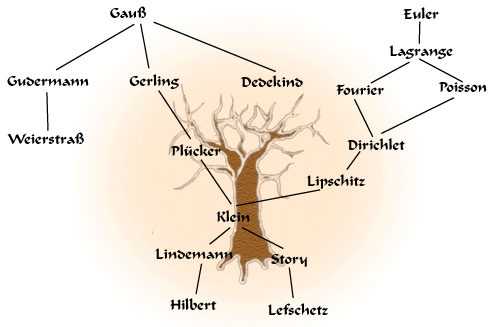
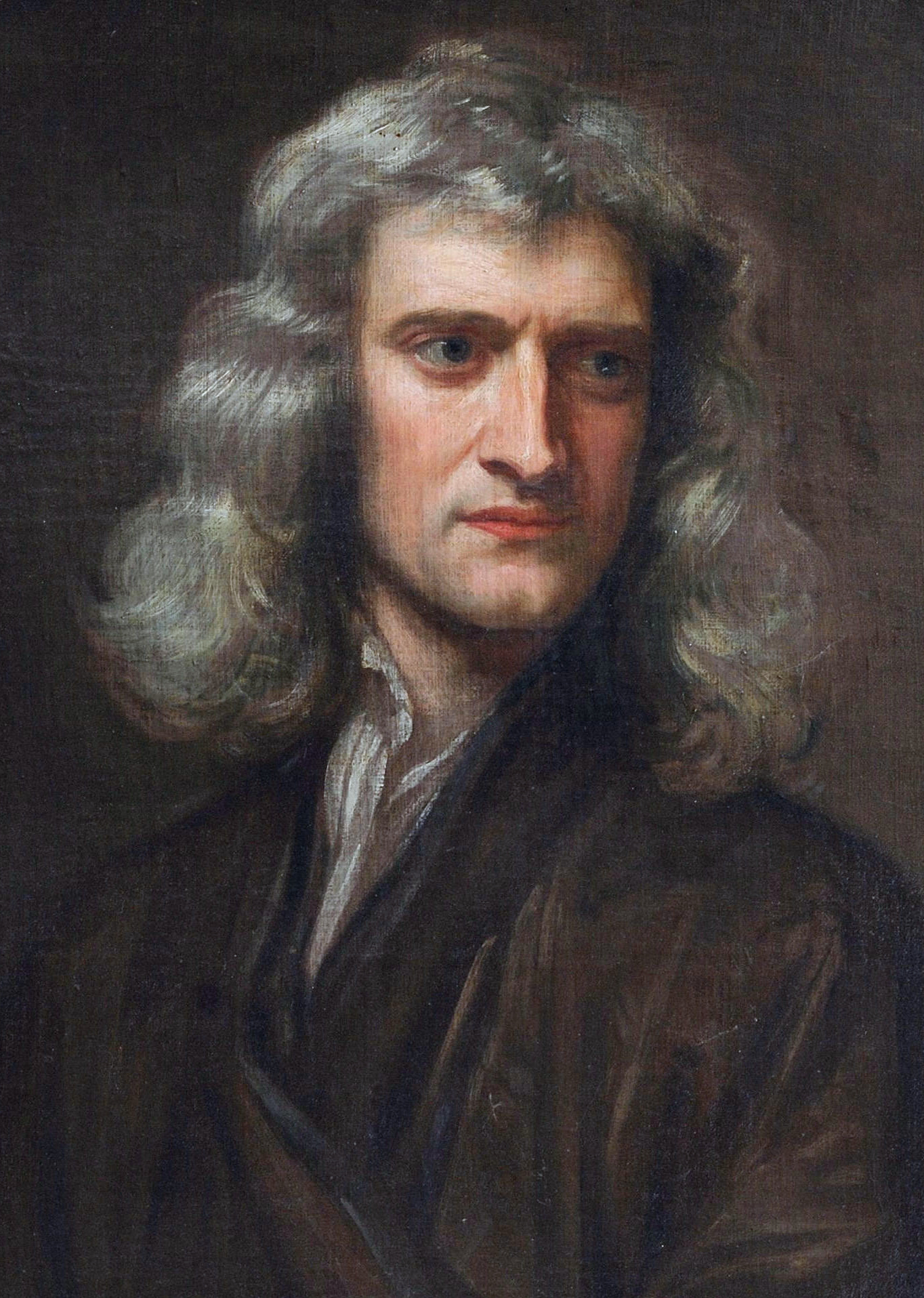
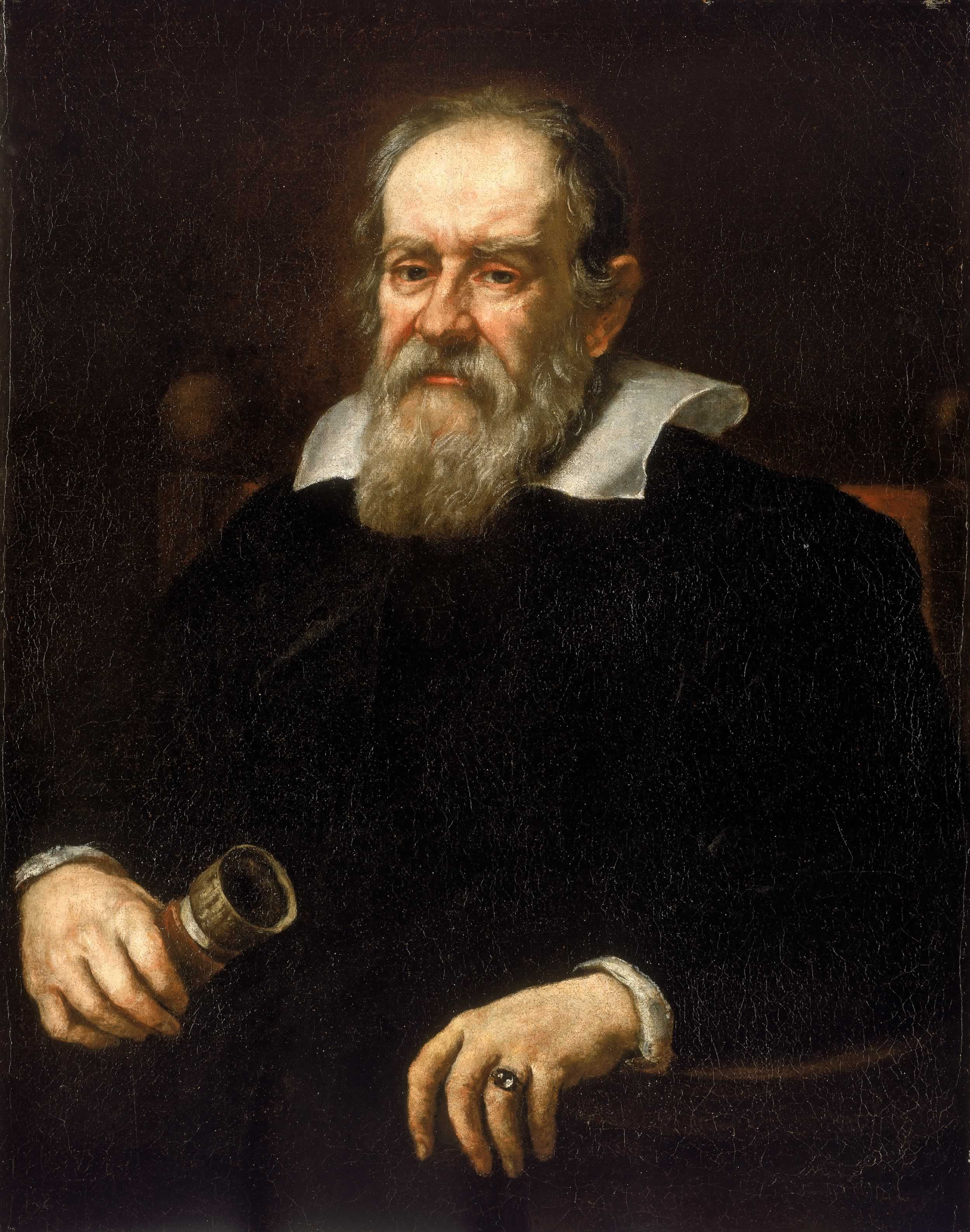
Academically I'm Issac Newton's 14th Great-Grandson

Everyone loves to feel a personal connection to history.  If the subject of Native Americans ever comes up around my wife's family all present will be told that they are direct descendants of Pocahontas.  My ancestors' last name used to be Neilson, which is Danish, but they anglicized it to Nelson when they arrived in America.  Now thanks to the American Mathematical Society and some mathematicians at North Dakota State University, academics can so the same.  The AMS and NDSU's math department have combined forces to produce the Mathematics Genealogy Project - an online, search-able database of mathematicians and like-minded physical scientists with over 145,000 individual entries of mathematicians and scientists dating back to the 14th century.

My adviser's degree is in applied math (as far as I can tell British universities call theoretical physics applied math), so I have a link into the system.  Here are a few of my more notable direct academic ancestors:

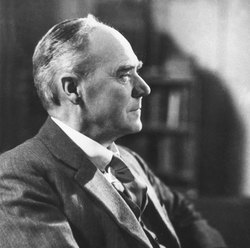
G.I. Taylor (2nd Great-Grandfather):  Experimentally showed that the inference pattern of photons passing through a double-slit set-up persisted even if only 1 photon was present at a time; one of the early pioneers in turbulence research; famously calculated the yield of the first atomic bomb from a photo on the cover of Life magazine to within 10% (to the annoyance of the US government, who had kept the yield secret)

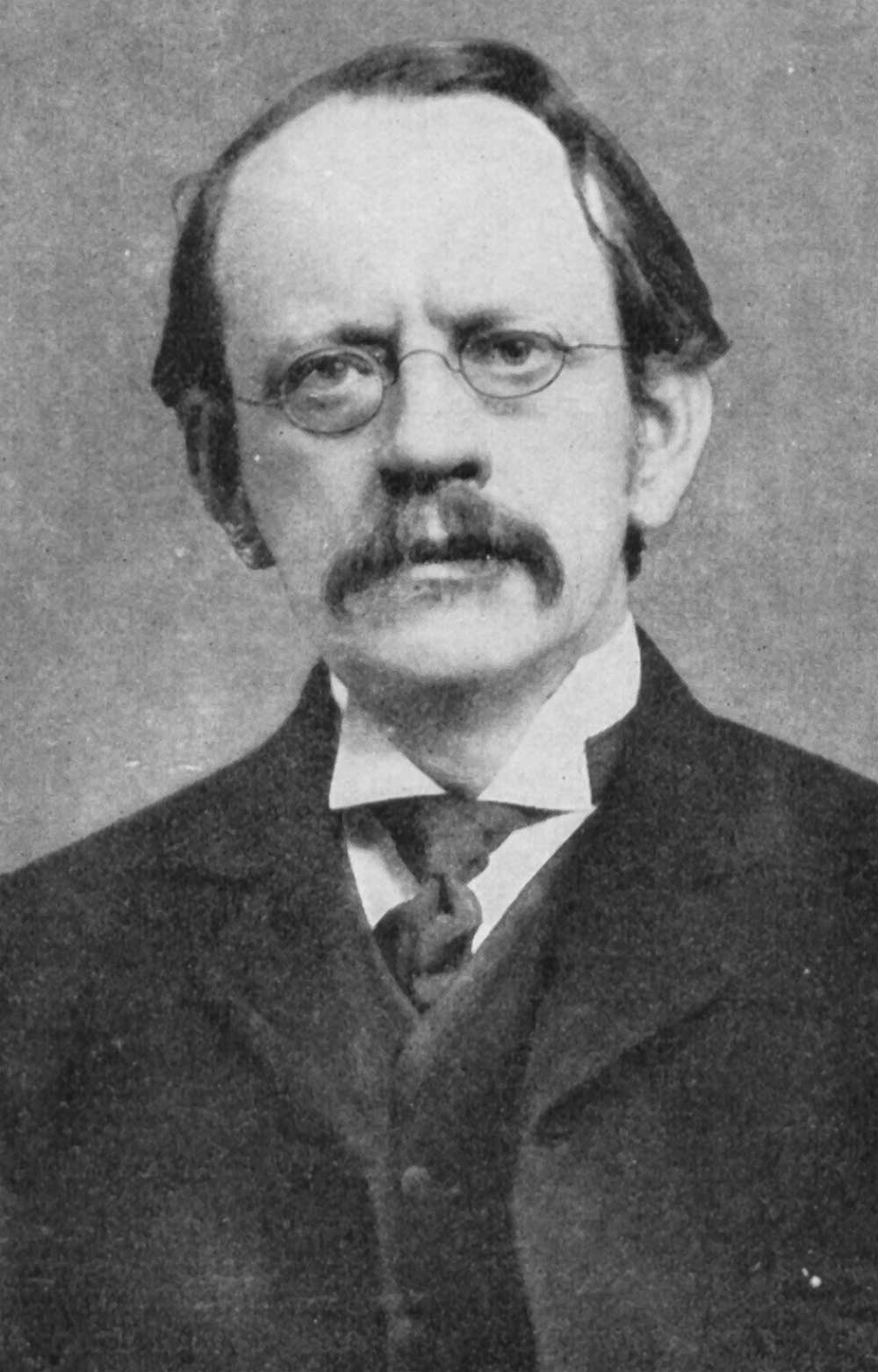
J.J. Thompson (3rd Great-Grandfather):  Discoverer of the electron (for which he won the 1906 Nobel prize) and isotopes; inventor of the mass spectrometer; proponent of the delicious-sounding "plum pudding" model of the atom, which was tragically later shown to be inaccurate


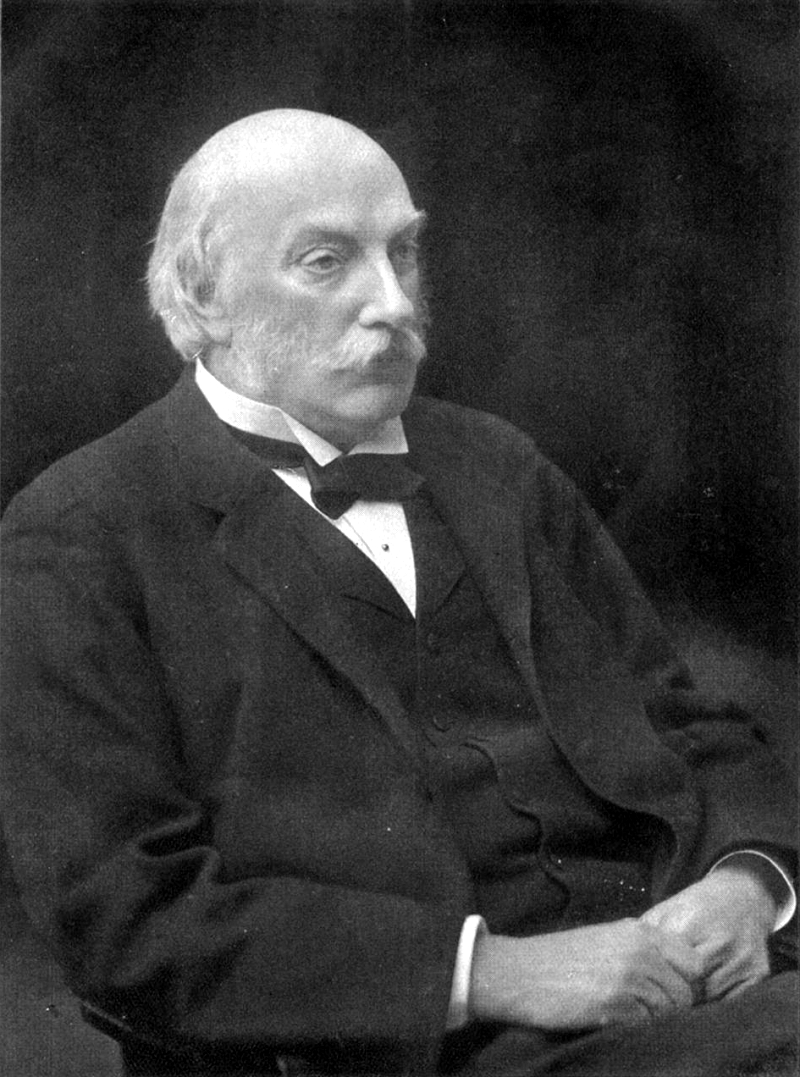
John William Strutt, 3rd Baron Rayleigh (4th Great-Grandfather):  Discoverer of argon (for which he won the 1904 Nobel Prize) and Rayliegh scattering, which explains why the sky is blue and the sun is yellow; invented the Rayleigh number, a dimensionless fluid parameter which controls the onset of convection; figured out how human ears use phase differences in sound waves to tell where a sound originates


Issac Newton (14th Great-Grandfather):  Inventor of calculus and Newton's laws of motion; discoverer gravity in the scientific sense; invented and built the first reflecting telescope; originator of the corpuscular theory of light and the concept of lumineferous aether because not even Newton could get everything right


Galileo Galilei (17th Great-Grandfather):  Inventor of the telescope; Father of the scientific revolution; had a little misunderstanding with the Pope; discoverer Jupiter's 4 largest moons, the phases of Venus, and sun spots (although their are some indications that Chinese astronomers beat him to it by looking directly at the sun with their bare eyes)


Like I said, everyone likes to feel a connection to the past and then tell everyone else about it.

Friday, October 15, 2010

Papers: How to Organize Electronic Journal Articles

I hate journal articles.  I don't hate publishing research.  Journal articles are the standard means of publicly communicating research findings to the rest of the scientific community and I don't hate that either.  What I hate is the fact that I need to keep track of literally hundreds of 10-20 page documents - it's a logistical nightmare.  My undergraduate adviser accomplished this with a pair of 5 drawer filing cabinets.  My current adviser has dozens of boxes of reprints sitting on shelves in our computing lab.  I generally prefer electronic versions for storage purposes, but that becomes a mess when getting papers from ADS, the arXiv, and individual journal websites - all of which use their own convention for filenames.  I hate the piles of papers, either physical or electronic, that result from journal articles.

However I have recently found something that helps with the mess:  a piece of software appropriately entitled Papers.  First a couple of disclaimers - it is not freely available (it costs $25.20 for students, $42 for everyone else), it only works for Mac OS X, and it's really designed for people in biological sciences, so it doesn't integrate as well with the arXiv as I would like.  Also since the software is developed by a small company (6 people, some of whom are also full-time scientists), upgrades and bug-fixes are often unpredictable.

Now that I've got the negative stuff out of the way, let's talk about why I'm writing this post.  The bottom line is that Papers saves me time trying to find papers I want and allows me to effectively carry my entire library of journal articles with me wherever I take my laptop.  On top of that, Papers can extract bibliographic information from PDF files and then export it in BibTex format, allowing me to easily create reference lists for papers.  On top of all that, it provides a nice front-end portal to almost all of the major databases like NASA ADS, the arXiv, Google Scholar, and more to provide useful features.  Let's say, for example, I want to know if one of the leading dynamo theorists and perhaps the most prodigious writers of journal articles in astrophysics (13 peer-reviewed journal articles so far this year) Axel Brandenburg has published anything new.  Papers automatically interfaces with ADS (or another database of your choosing) and downloads the titles and bibliographic references to all of recent entries for all of the authors in my database.  Here's a screen shot to illustrate my example and to generally show how spiffy Papers looks (click to embiggen):
Say what you will about Macs but their GUI's sure are pretty.

The software is also easy to use as a PDF reader with note-taking feature. I regularly use it to read new articles on my bus rides to and from campus. They even have a new version for the iPad that allows you to read and annotate PDF's on Apple's latest wonder. If anyone would like to send me an iPad I'd be happy to write a review on that feature as well.

So if you hate piles of paper on your desk or trying to organized PDF's on your hard drive and happen to use a Mac, check it out. It's not a perfect solution, but it is the best thing I've found to alleviate my hatred of journal articles yet.

Monday, June 28, 2010

Handguns, The Supreme Court, and CU

As many of you are probably already aware, today the US Supreme Court ruled that laws banning the ownership of handguns and possessing a handgun in a private home are constitutional rights under the 2nd and 14th amendments. This continues a trend by the current court towards limiting government restrictions on handgun ownership and affirming the right to bear arms. This is a large national issue, the kind we usually avoid here, but if you will indulge me for just a minute I would like to show you how these large national issues can impact a university near you.

Along these same lines, two years ago the state of Utah passed a law making it illegal for state universities to ban those holding concealed weapons permits from carrying their weapons on campus. In Colorado most major universities including the University of Colorado (CU), Colorado State University, and the Colorado School of Mines have had campus regulations forbidding anyone, including concealed weapons permit holders, from bringing firearms on to campus. However in the wake the the Supreme Court's 2008 decision striking down Washington, D.C.'s handgun ban, a student at CU with a concealed weapons permit filed a lawsuit claiming the the university's ban violated his 2nd amendment rights. The suit was initially dismissed by the trial judge but in April of this year a state appellate court ruled that the trial judge had erred in his ruling and his rationale for doing so, remanding the case for trial. Last week the CU Board of Regents narrowly voted in favor of fighting the to keep the ban.

This has caused some controversy on CU's campus and various faculty and students groups have passed resolutions for or against the ban. One such group was the United Government of Graduate Students, to which I am my department's representative. Most of the time the hottest topic UGGS deals with is the fall picnic for grad students, so I felt a little over my head.

In my mind there are two questions here, both of which I believe have to be answered to properly address this question:
  1. Should the university have the right to ban concealed weapons on its campus?
  2. Should the university ban concealed weapons on its campus?
So what do you think? Does your university have a concealed weapons ban? Does it have the right to ban concealed weapons? Should it?

Friday, June 4, 2010

Insight on Admissions: Impersonal Statements

Previous Posts in This Series:
When our admissions committee sat down to look at an application, we were really looking at 4 things - GRE scores, GPA, letters of recommendation, and so-called “personal statements”. At CU the applicant is asked to upload a pdf or MS Word document with their online application containing a statement of how their previous experiences qualify them for our program and what their future goals are. Most of the other programs I applied to asked for something similar. One difference at CU is that we do not give them any guidance on the length of their statement, so we get everything from a couple paragraphs to much, much more. One individual this year that had a 5 page statement, a CV, and copies of two papers they had been co-authors on for a total of 37 pages. Another was applying for a Fulbright fellowship and decided to include their entire Fulbright application, which was at least 50 pages.

The average statement, however, is about 2-3 pages and in my opinion almost completely useless. That’s not to say, however, that there isn’t an easily noticeable variation in the quality of these statements. In many cases it becomes very clear right away if the applicant has poor writing skills, which in my experience is about half of the applicants. The problem is that the half with poor writing skills are almost without exception also in the half that have poor GRE scores, GPAs, and letters of recommendation. It’s not that the personal statement doesn’t tell you anything about the applicant, rather the personal statement doesn’t tell you anything you don’t already know.

For the half with decent writing skills, 90% of the personal statements go something like this:
  1. Inspiring anecdote showing a childhood love of astronomy/physics/science.
  2. Brief life history
  3. Review of research interests/academic accomplishments
  4. Shameless sucking-up to the school/department/faculty member of choice
Check yours. I did almost exactly that and I’ll bet you a nickel you did too.

Here at CU, and I assume in almost all major physics programs, there are far more applicants than available spaces, thus eliminating the bottom half of the applicant pool is not really what needs to be done. Rather the key is determining who are the best of the best among the applicants. The ability to craft a coherent piece of writing is a given for those top candidates. In this past year’s process, there was only one person whose personal statement was very poor who probably otherwise would have been admitted.

Now that I’ve made some blanket statements, let me tell you the three cases in which I think personal statement have some utility.
  1. They are essential for foreign applicants. If you write that the “University of Colorado executes my hopes”, it’s a safe bet that your language skills are going to be an issue (despite your immaculate TOFEL score).
  2. Personal statements are extremely important if you have had any major abnormalities in your path to graduate school. This could mean that you are 37 and worked as a machinist for 15 years before attending college. It could be you were attending an Ivy League school but transfered to a regional state college in your hometown after your mom was diagnosed with cancer during your junior year. Those things just don’t show up on a transcript.
  3. Some small fraction of letters of recommendation come with almost no background information, so the committee has no idea who the recommender is or how they know the applicant. Personal statements can provide context for these cases.

Despite my opinions, personal statements are here to stay, so here’s my advice on how to write one, if you must. First, don’t start with a paragraph on your high school math class or your uncle’s telescope that you looked through when you were 5. Nobody cares. Just get to the point - what makes you qualified to attend our program? Second, clearly state who your recommenders are and why they know you. Third, openly address anything unique about your path to grad school. If you scored in the 95% on the physics GRE but got C’s in your freshman physics classes, tell us why and BE HONEST. If you have sensitive personal issues, don’t feel like you need to go into details - simply give us the big picture. No on wants to read a list of your prescriptions or the details of your love life. Finally, have someone else proofread your statement several times. Typos - especially misspellings - just show that you don’t really care.

Sunday, May 23, 2010

Thoughts on the Qualifying Exam

I am pleased to announce that I have passed my qualifying exam, which means UNC will allow me to continue on and get my PhD (assuming I actually do some research). So now that I have successfully passed my qual I will now express my thoughts on the matter.

Here at UNC-CH the department is a combined physics and astronomy department which means the astro students are mixed in with the rest of the physics students for the basic classes (E&M with Jackson, Classical Mechanics with Goldstein, and Quantum Mechanics with Sakuri, Statistical Mechanics with some book that I never heard of, nor wish to hear of again), but after that the astro students separate off into a different set of classes (Stellar Structure, Galaxies, "High Energy" (compact stellar objects, the class is called High Energy for historical reasons, and the university is being very picky at the moment and won't let the department change the name, so the professor teaching the class changed the material, room location etc. and didn't bother to tell the university. It's a little easier to do when you only have seven students in the class.)). Then when the students are done with those basic classes they then take the qualifier that consists of six written tests roughly corresponding to the classes that we have taken. In my case that meant E&M, Classical Mechanics, Quantum, Stat Mech, Stellar Structure and "High Energy".

Each test consists of five questions, of which we only have to answer three (or if we answer more, then they will only take the three highest scores into consideration). We are given two tests at a time and we have three hours to complete the two tests (for completeness, the groupings were: E&M and Classical, Quantum and Stat Mech, Stellar Structure and "High Energy"). Each question is graded out of 10 points and to pass each test a minimum of 10 points is needed out of 30 possible. If a student fails any one test then they fail the entire qualifying exam (there are some exceptions made for students who do sufficiently well on the other tests, or do exceptionally well in the corresponding class that that failure is waived). Then assuming the student passes each individual test, then the committee looks at the overall score. The overall score must be above a certain level in order for the student to pass (last year the cut off was set at 50%, I don't know yet what the cut off was for this year, but apparently I was above it). This means that a student must get an average of 15 out of 30 points on each test (assuming a cut off of 50%).

The pass/fail rate changes year to year, I have heard of years where everyone passed, whereas last year the failure rate was 20%. Anyone who fails is given another chance to pass it. If they do not succeed on the second try then they are typically awarded a masters and not allowed to get a PhD.

Now the actual tests:

Typically the professor who taught the corresponding class will submit and write at least two of the five questions for the test. The other questions come from any other professor who chooses to submit them to the qualifying committee (typically the professors who submit the questions also sit on the committee). So they try to have at least a few questions coming from the person who actually taught the class, so that if the professor emphasized a particular topic then the students will have a better chance at answering the questions submitted by that professor. But this also means that the majority of the questions came from a professor who the students never had a class from, and thus are not familiar with the type of questions they ask on exams.

Some of the test problems are actually written by the professors, while others come from various sources (i.e. the University of Chicago qual book, sometimes this can be painfully obvious as one year on a previous exam the question was copied straight out of the Chicago book word for word, including typos). Other sources include previous midterms and finals given by professors who have taught the classes in previous years. Thus in response to this, the grad students at UNC have built up a standard battery of study materials, including old qualifying exams (we have access to them, and some questions repeat on a ~5 year cycle (+/- 2 years), sounds predictable but it really isn't because it only happens on a very select set of problems, and this has only held true over the last 11 years), question and solution books for qualifying tests (including the already mentioned Chicago book and the Lim books), and of course old midterms and finals (with solutions! which we really aren't supposed to have but some how someone got a copy that has been passed around...).

So in reality for some of the subjects it doesn't turn into a test of our ability to work problems in physics, but it turns into a test of our ability to work out, memorize and regurgitate problems from the standard set of problems. Granted, for some of these subjects there is only so much that you can test on so that necessarily limits the total number of problems that can possibly be used. But some of the subject tests are actually well written and really do test our understanding of physics (or astronomy as the case may be).

For my particular studying I stuck with old qual problems, and the Chicago book, old midterms and finals, and a general review of important subjects. Specifically in the Chicago book I stuck with the stat mech portion (more explanation about that here, it was a really interesting experience). This turned out to be very advantageous because two problems on the stat mech portion of the qual came straight from the Chicago book.

Overall the tests were hard (but only two of them I felt were actually good measures of my knowledge and understanding of physics and astronomy), but from one perspective I can see why having the tests is necessary. As my adviser put it, the qualifying exam is a very imperfect method of separating PhD candidates from everyone else, but until they come up with a better method, we will have to stick to this.

Tuesday, April 13, 2010

Astrophysics as a Career: Where Do Professors Come From?

My last post in this series tackled the question of whether your PhD institution determined your career trajectory. The paper I cited by Gibson et al indicated that overall the effect was smaller than one might imagine, but that if a permanent position was the goal a PhD from a prestigious university does help. They did this by tracking the graduates of several PhD-granting institutions - something I’ll call forward career tracking. In this post I’m going to present some research that I have done recently that tries to address the same question by what I’ll call reverse career tracking.

Reverse career tracking means that I have found the PhD institution for faculty members at randomly selected universities and college in the US. To do this I randomly selected colleges and universities from the Carnegie Classifications of Institutions of Higher Education. To help provide a somewhat even sample I selected physics departments from the various Carnegie classifications to match the distribution of faculty between doctoral, master, and bachelor granting physics departments, as reported by the American Institute of Physics.

I then used department webpages and AIP surveys to find the PhD institution for each faculty member in each department. I did not include individuals that earned PhDs (or equivalents) from foreign institution, faculty members with Masters degrees, or those for whom no information could be found or multiple institutions were listed. I then took that data and found how many current faculty taught at universities in one of four categories (again using the Carnegie classifications): Doctoral-Very High Research Activity (DV, previous known as R1), Doctoral-High Research Activity (DH), Masters (M), and Bachelors (B). Universities with no physics department were counted with the bachelors granting departments as long as they had a major that included significant physics content and at least one identified professor of physics.

Finally I assigned each PhD source institution a score based on an average of 101 minus their rank according to the 2009 US News & World Report of graduate program in physics and 101 minus their 1997 National Research Council rank. Programs ranked in the top 100 of one system but not the other were given a score of 1 in the missing ranking system. Thus the higher the score the better ranked the institution. Overall these two rankings correlated extremely well, however the NRC rankings had an average ranking 13 points higher than the US News rankings, with most of the discrepancy coming in for rankings above 40 in either system. The correlation is shown here:
Finally I binned the data into average ranking ranges and did a standard least-squares linear fit to the binned data, including calculating the uncertainties in the best-fit parameters. In graphical form, the results are:

For DV faculty there is a strong preference for faculty to have come from high ranking institutions, in fact the slope of the linear fit is positive at the 8-sigma level. However as we look at the linear fits to the DH and M, we see that while they all have positive slopes, they are all consistent with no slope at the 2-sigma level. The linear fit to the B data is consistent with zero at the 1-sigma level.

It’s no surprise that having a PhD from a big name university helps one get a job at a big name university. Over 50% of faculty at top research universities received their PhD’s from institutions ranked in the top 15. However there is little to no evidence that getting a PhD at a highly ranked institution matters in getting a faculty job at anything except a highly ranked PhD institution. With almost half of physics and astronomy faculty in the US at Masters and Bachelors granting departments, if you want to be a professor and you are willing to take on some additional teaching responsibilities and give up some prestige, where you do your PhD matters little.

The Astrophysics as a Career Posts:

Friday, April 9, 2010

Atrophysics as a Career: What's in a Name?

In my last post in this series, I claimed that there is roughly one faculty job and one long-term research job for every two PhDs in astrophysics earned each year. While that is currently true it’s also somewhat rare if you look back over the last twenty years. The average number of tenure-track faculty jobs per new PhD since 1990 is roughly a third. If you factor in that roughly half of those positions are at Masters- or Bachelors-granting institutions, that means that only one-sixth of us will end up as professors at large research universities. Furthermore only roughly 70% of PhD astrophysicists will remain actively publishing 5 years after graduation. While the 30% that are not publishing could include some faculty at Bachelors-granting departments, it is likely that a significant fraction of us will at some point leave the field.

That leads to the question who gets what positions? What separates the tenure-track faculty at prestigious schools from those that end up leaving the field or working as soft-money researchers? There are a number of ways to answer that but I’ll focus on two. The hardest and probably most accurate way is to track graduates of various programs and see where they end up. The easier way is to look at the faculty of various departments and track where they came from. I’ll talk about the former in this post and the later in a later one.

In 1999 Brad Gibson, Michelle Buxton, Emanuel Vassiliadis, Maartje N. Sevenster, D. Heath Jones, and Rebecca K. Thornberry put a paper called “On the Importance of PhD Institute in Establishing a Long-Term Research Career in Astronomy” on the arXiv. It’s a great paper if a bit dated. However I think the core of their work remains valid. So here are the big points:
  • Independent of where you got your PhD 60% to 75% of Americans with PhD’s in astrophysics remain active in research from 5 to 20 years after they get their degree. In graphical form:
  • Where you get your PhD does impact where you remain active in research. If you graduate from a prestigious program you tend to get permanent or tenure-track positions, while if you graduate from a less prestigious program you are more likely to end up in soft-money or other temporary positions. This is shown graphically by:

So here’s the take-home messages:
  1. If you want to be a professor at a research university it helps to go to a big name school, but not as much as you might think. Being in the top 25% of your PhD class in Wyoming means you are just as likely to get a permanent research position as if you are in the top 50% of your class at Harvard.
  2. If you want to keep doing research, it really doesn’t matter where you go as long as you are prepared to do that research in soft-money positions or other less glamorous appointments.

The Astrophysics as a Career Posts:

Wednesday, April 7, 2010

Astrophysics as a Career: PhD Production and Jobs

My undergraduate adviser, Dr. David Neilsen, gave me a great piece of advice when I was trying to decide where to attend graduate school. He said “take the position that will most help you get your next position”. The more I have thought about it the more I realize the wisdom in that phrase. All too many undergraduates apply for grad school or grad students apply for post-docs without thinking about what they will do afterward. As much as possible one should plan his or her career in the opposite direction - chose an objective and then figure out how to get there in reverse order.

For 74% of all grad students that objective is to become a tenured professor at a large research institution or national lab. Unfortunately, there simply aren’t that many positions available. In 2006 there were over 1,400 physics PhDs granted and less than 300 new faculty hires at PhD granting institutions and 150 hires at national labs in the US. Obviously many of us are not going to do what we think we’re going to do. What happens to those who don’t get tenure-track positions at large research universities?

To answer that I turn to an outstanding paper by Travis Metcalfe entitled “The Production Rate and Employment of Ph.D. Astronomers”. I would generally recommend reading the paper - it’s concise and contains some valuable and interesting information - but let me highlight what I find to be the most important finding, shown in this figure:By comparing the number of jobs advertised per new PhD in astronomy, Metcalfe has essentially calculated the rough probability that a new PhD will hold each of these jobs. The take home message is that in astronomy, every new PhD can expect to hold 1.5 post-docs, which at 3 years for the average post-docs means 4 to 5 years on average, and then roughly half will end up in research positions while the other half will end up as faculty. However if we look at those numbers over time, the story gets less optimistic. In 1990, for example, there was only 1 faculty job for every 6 new PhDs, making the competition much steeper. However the AIP’s projection of the number of physics PhDs through 2012 is roughly constant, so hopefully we can avoid a repeat of the bad-old-days of the early 90’s where production was high and jobs were scarce.

The Astrophysics as a Career Posts:

Tuesday, April 6, 2010

Astrophysics as a Career: An Introduction

When I was applying to graduate school, I hadn’t really thought about what I wanted to do with my life other than some vague notion of becoming one of my professors. I liked school and I liked doing research so graduate school seemed like a great option. I also knew that the unemployment rate for Ph.D. physicists was extremely low (2% in 2006), so it seemed like a good career choice. For me things have turned out pretty well - I am in a good program in a good research group making progress towards my PhD. I consider myself lucky, though, as I have seen several people either fail out of grad school or chose to leave without completing their degree due to dissatisfaction with their adviser, their institution, their research topic, or simply their career.

Much of the advice I received as an undergrad was anecdotal and varied strongly with the career path of the source. Those that had done well told you grad school was a wonderful idea while those on their fourth post-doc told you to do something else. In my next several posts I’m going to explore some of the available data on career issues relevant to PhD scientists in an attempt to give anyone thinking seriously about their career in physics some conclusions based on data rather than stories. I will specifically highlight my sub-field, astrophysics, because I know it well and it is small enough to be manageable. These results will translate to varying degrees of exactness to other sub-fields.

I should also mention that I am by no means an expert in this subject. I’m just a third year grad student armed with some data both from other people and myself that wants to help you think about grad school and your career before you hit that 4th post-doc.

To start, let me layout the career path for someone in physics and astronomy. Details on these steps will come later, but for those of you that don't already know, here's a career in physics and astronomy:The data for this chat is available a the American Institute of Physics' Statistical Research Center.